
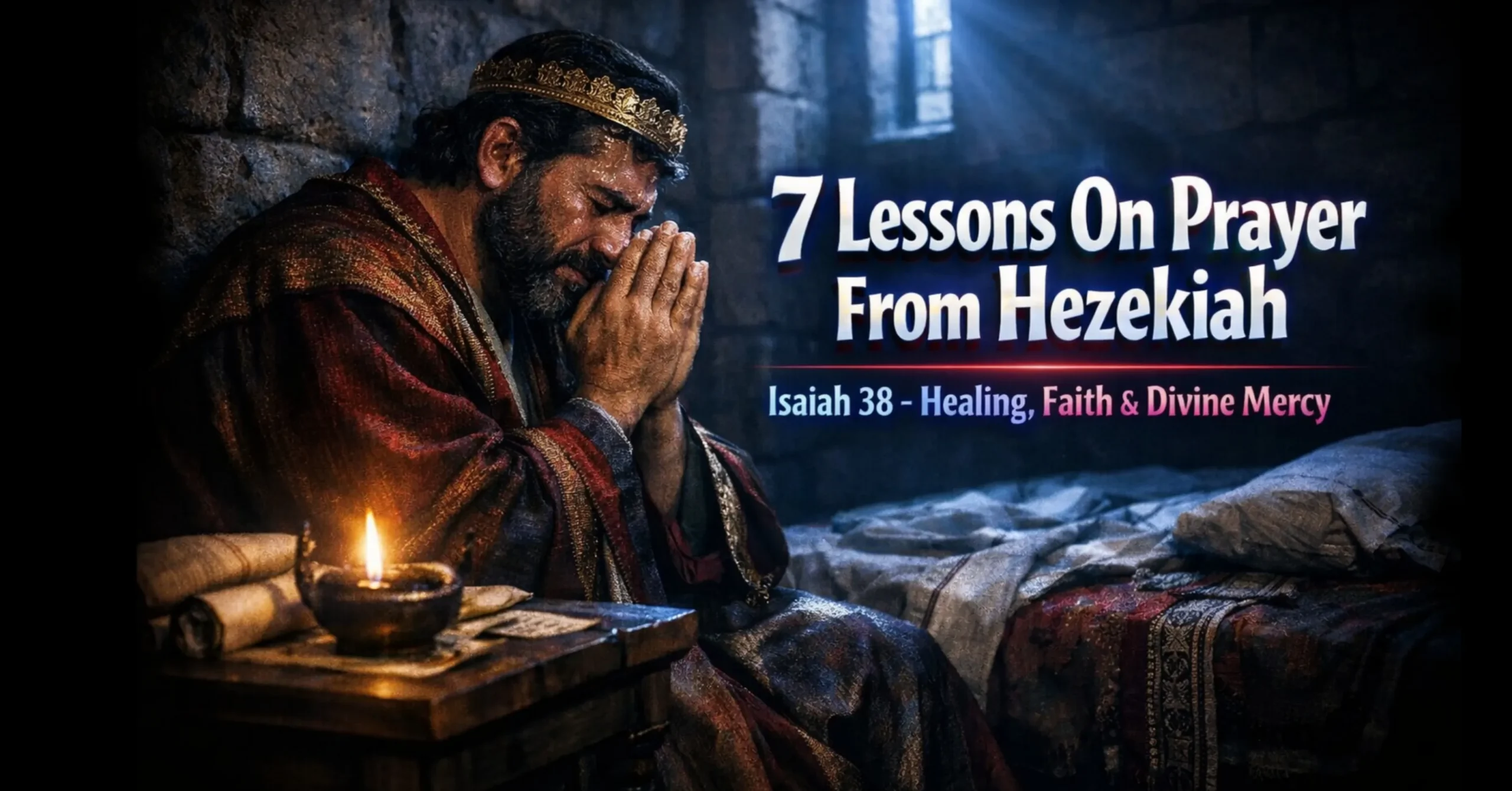
Prayer is one of the most powerful ways we connect with God, yet many believers struggle to pray with confidence, humility, and persistence. The life of King Hezekiah provides a timeless example of how prayer can transform both personal circumstances and national crises. Through his recorded prayers in Scripture, we can learn how humility, earnest pleading, trust in God’s faithfulness, and reliance on godly counsel shape a prayer life that honors God.
In this article, we explore 7 lessons on prayer from Hezekiah, highlighting practical steps to apply his example today. Whether facing personal struggles, health challenges, or spiritual battles, these lessons offer actionable guidance for deepening your faith and cultivating a consistent, meaningful prayer practice.
Practical Tip: Begin your prayer time today by reflecting on one area where you need God’s guidance, and invite His presence with a humble, open heart.
“Grow your prayer life with 60 inspiring morning prayers for encouragement and grace“
Who Was King Hezekiah?
King Hezekiah was the thirteenth king of Judah, ascending the throne at the age of 25 after the reign of his father, Ahaz, who led the nation into widespread idolatry (2 Kings 16:1-4). Unlike his father, Hezekiah devoted himself fully to God, seeking to restore worship, purify the temple, and lead Judah back to covenantal faithfulness. His life unfolded in Jerusalem during a turbulent period (715–686 BC) when Assyria threatened the divided kingdoms of Israel and Judah, creating high stakes for both national survival and spiritual fidelity.
Hezekiah’s leadership was marked by both personal devotion and public reform. He removed pagan worship practices, reinstated proper temple sacrifices, and celebrated the Passover with renewed zeal. At the same time, he faced the complex realities of a weakened nation surrounded by hostile powers. His prayers, therefore, were not only personal petitions but also intercessions for his people and God’s glory.
Practical Tip: Reflect on how your personal faith can influence your community. Like Hezekiah, let your devotion shape not only your private life but also your impact on others through prayerful guidance and example.
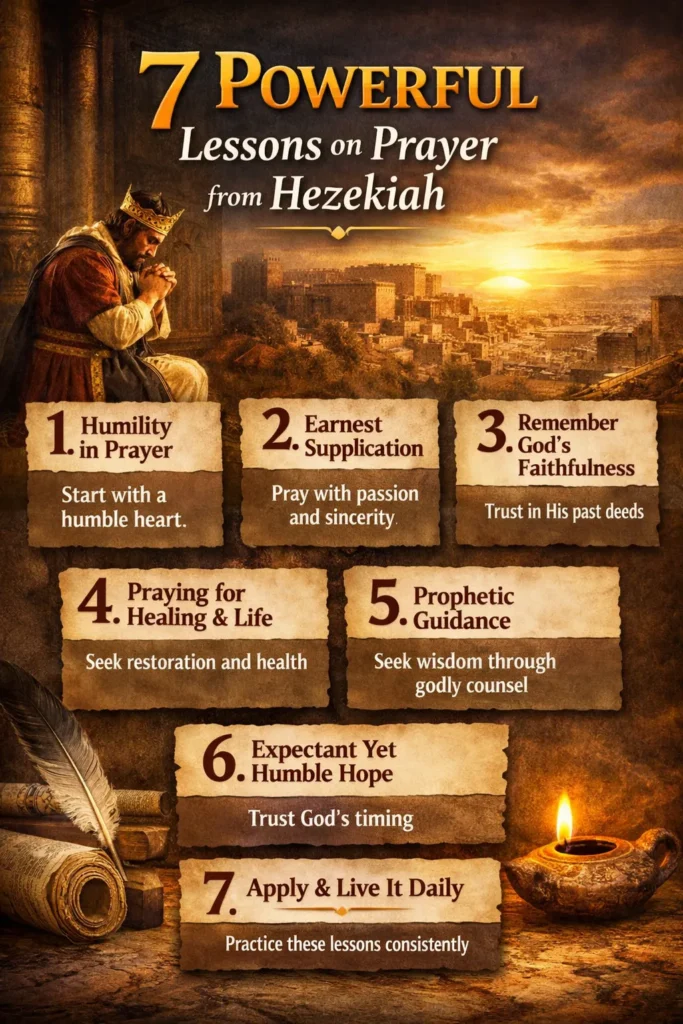
7 lessons on prayer from Hezekiah
Hezekiah’s Prayer During Illness – Lessons 1 & 2
King Hezekiah’s encounter with a life-threatening illness provides a powerful example of personal prayer under deep distress. The biblical account in Isaiah 38 and 2 Kings 20 shows how he approached God with honesty, humility, and urgent supplication. These prayers reveal lessons that remain profoundly relevant for believers today.
Lesson 1 – Humility in Prayer
When confronted with his impending death, Hezekiah expressed humble surrender before God. He did not rely on his royal status or achievements but acknowledged his weakness and need for divine mercy (Isaiah 38:1-8). His posture teaches us that true prayer begins with confession and humility, recognizing that God alone is sovereign and able to answer our deepest needs.
Practical Tip: Start each prayer by honestly acknowledging your limitations and surrendering your concerns to God. This humility opens your heart to receive His guidance and peace.
Lesson 2 – Earnest Supplication
Hezekiah’s plea for life was marked by intense, focused petitioning (2 Kings 20:1-7). He prayed earnestly, showing that heartfelt and specific requests matter deeply in God’s eyes. This teaches us that prayer is not just a ritual but an opportunity to pour out our hearts sincerely, with faith that God listens and acts according to His will.
Practical Tip: Set aside dedicated time for concentrated prayer when facing serious challenges. Speak your needs clearly and trust God with the outcome, just as Hezekiah did.
Hezekiah’s National Intercession – Lessons 3 & 4
Beyond his personal struggles, Hezekiah also prayed boldly for his nation. When Assyria threatened Judah, he turned immediately to God, showing that intercession for others is a vital aspect of a faithful prayer life (Isaiah 36–37; 2 Kings 18–19). His example teaches modern believers how to balance personal petitions with concern for the larger community, trusting God to act in both individual and corporate circumstances.
Lesson 3 – Remember God’s Faithfulness
In the midst of the Assyrian siege, Hezekiah recalled God’s covenant promises and past deeds (Isaiah 37:16). He appealed to God not only on Judah’s behalf but also to honor His name among the nations. This demonstrates that effective prayer often begins by remembering God’s faithfulness, grounding requests in His proven character rather than our uncertainty.
Practical Tip: Before presenting needs in prayer, take a moment to reflect on how God has been faithful in your life. Let gratitude and remembrance shape your petitions.
Lesson 4 – Praying for Healing & Life
Hezekiah also prayed for physical healing and extended life (Isaiah 38; 2 Kings 20). His prayers combined boldness with surrender, asking God for a tangible outcome while trusting His ultimate plan. This lesson shows that praying for health, restoration, or life changes is appropriate, as long as we remain humble and submit to God’s will.
Practical Tip: Pray boldly for your physical, emotional, or spiritual needs, but always end with a statement of surrender, trusting God’s timing and wisdom.
Lesson 5 – Prophetic Guidance via Isaiah
One of the remarkable aspects of Hezekiah’s prayer life is his partnership with the prophet Isaiah. In both his illness and during the Assyrian crisis, Isaiah acted as God’s messenger, relaying divine promises and guidance (Isaiah 38:5; 37:21-35). This shows how prophetic intercession can clarify God’s will, confirm His responses, and strengthen our faith during urgent circumstances.
Hezekiah’s example teaches that prayer is not always a solo activity. Seeking godly counsel, submitting to wise spiritual guidance, and participating in corporate prayer can amplify the effectiveness of our petitions. Isaiah’s role reassured Hezekiah that God’s response was certain and purposeful, highlighting the power of faith combined with divine counsel.
Practical Tip: When facing major decisions or crises, involve trusted spiritual mentors in prayer. Their godly perspective can guide, confirm, and deepen your faith while praying for yourself and others.
Lesson 6 – Expectant Yet Humble Hope
Hezekiah’s prayers were answered quickly and graciously God extended his life and delivered Judah from the Assyrians (Isaiah 38:5; 2 Kings 19:35). Yet, even in receiving blessings, he remained humble, giving all glory to God rather than claiming credit for himself. This teaches us that prayer should combine faithful expectation with humility, trusting God’s timing and wisdom without presumption.
Believers can learn from Hezekiah that God responds to sincere petitions in His perfect way. Expectant prayer does not demand outcomes but faithfully trusts God to act, honoring His character and purposes. This balance encourages perseverance, reduces frustration, and nurtures spiritual maturity in both private and corporate prayer.
Practical Tip: Approach prayer with confident hope, yet remain open to God’s plan. Celebrate answered prayers with gratitude and continue trusting Him in every circumstance.
Lesson 7 – Applying Hezekiah’s Prayer Lessons Today
The seven lessons from Hezekiah’s prayer life are not just historical insights they are practical tools for modern believers seeking a vibrant prayer life. By translating each lesson into daily practice, we can cultivate a rhythm of devotion that deepens faith, nurtures humility, and strengthens reliance on God.
A simple way to apply these lessons is through a seven-day micro-practice:
| Day | Focus Lesson | Practical Application |
|---|---|---|
| 1 | Humility in Prayer | Begin prayers with confession and surrender. |
| 2 | Earnest Supplication | Dedicate focused time for urgent, heartfelt requests. |
| 3 | Remember God’s Faithfulness | Reflect on past answers or promises before petitioning. |
| 4 | Praying for Healing & Life | Boldly pray for physical or emotional restoration, surrendering outcome. |
| 5 | Prophetic Intercession | Seek guidance from godly mentors or participate in corporate prayer. |
| 6 | Expectant Yet Humble Hope | Pray confidently, trusting God’s timing without entitlement. |
| 7 | Habit Formation | Commit to short, daily sessions and nightly reflections. |
By incorporating these daily steps, believers can transform lessons from Hezekiah’s prayer into actionable habits that strengthen both personal and communal faith.
Practical Tip: Start small commit 5–10 minutes each day to one lesson, and reflect nightly on how it changes your prayer posture and trust in God.
Where in Scripture Can We Find Hezekiah’s Prayer and Its Impact?
Hezekiah’s prayers are recorded in several key passages of Scripture, giving us insight into both personal petition and national intercession. Studying these passages side by side shows how prayer operates in real-life crises and how God responds to faithfulness.
| Scripture | Event / Request | Immediate Outcome |
|---|---|---|
| Isaiah 38 | Hezekiah prays for life during illness | God promises additional years and gives a miraculous sign; Hezekiah composes a song of thanksgiving. |
| 2 Kings 20 | Parallel account of Hezekiah’s plea for healing | God extends Hezekiah’s life by 15 years after Isaiah conveys His word. |
| Isaiah 36–37 & 2 Kings 18–19 | Hezekiah intercedes during Sennacherib’s siege | God delivers Jerusalem; the Assyrian threat is removed. |
These passages highlight the dual nature of Hezekiah’s prayer: personal vulnerability and public intercession. Whether pleading for his own life or seeking national deliverance, Hezekiah modeled how prayer aligns the heart with God’s will and demonstrates trust in His sovereignty.
Practical Tip: Study these passages in your own Bible, noting how Hezekiah’s approach can inform your personal and intercessory prayers today.
FAQs About Hezekiah’s Prayer
What lessons can we learn from Hezekiah’s prayer?
Hezekiah’s prayer teaches humility, earnest petition, remembering God’s faithfulness, seeking guidance, and trusting God’s timing.
What is the significance of Hezekiah’s prayer?
His prayer shows that God hears personal and national petitions and acts graciously in response to sincere faith.
What are the five key points of prayer?
Humility, earnest supplication, faithfulness, seeking counsel, and expectant yet humble hope.
What does Hezekiah’s illness teach us?
It teaches bold prayer for life, surrender to God’s will, and trust in His mercy.
Conclusion
Studying the 7 lessons on prayer from Hezekiah provides practical guidance for building a stronger, more faithful prayer life. His example from personal illness to national crisis shows how humility, earnest supplication, remembering God’s faithfulness, seeking counsel, and expectant hope can transform both personal and corporate prayer (lessons from Hezekiah’s prayer).
Modern believers can take concrete steps to apply these lessons:
- Daily Reflection: Spend 5–10 minutes reflecting on one lesson each day.
- Personal and Intercessory Prayer: Balance prayers for yourself with prayers for others, following Hezekiah prayer for healing and Hezekiah prayer against death.
- Scripture Study: Read Hezekiah prayer Isaiah 38 and related passages to deepen understanding of God’s faithfulness.
- Seek Guidance: Engage trusted spiritual mentors for prophetic intercession and wisdom.
- Habit Formation: Use short daily sessions and nightly reflections to make prayer a consistent practice.
By integrating these steps, believers can turn insights from Bible lessons on prayer into lasting habits, deepening faith and reliance on God. Hezekiah’s life reminds us that God listens, acts, and honors sincere petitions.
Practical Tip: Begin today with one lesson from Hezekiah, write it down, pray intentionally, and note how God responds in your life over the week.