
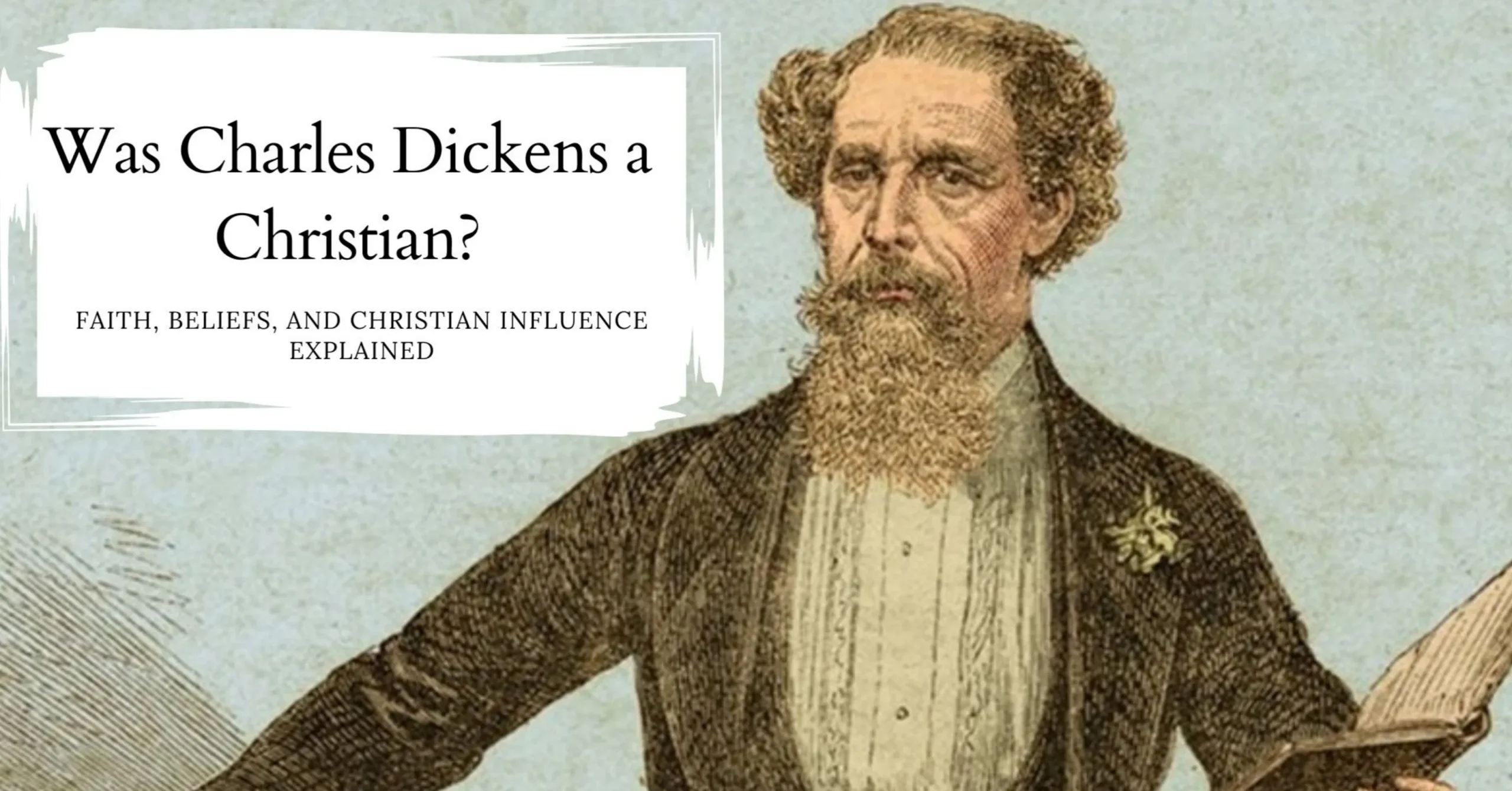
Charles Dickens is celebrated worldwide for his unforgettable novels and rich storytelling, but many readers wonder about the man behind the words: was Charles Dickens a Christian? While his works are filled with moral lessons, compassion, and critiques of societal injustice, understanding his personal faith adds a deeper layer to his writing.
Dickens grew up in a Church of England household and was influenced by Christian teachings, yet he often questioned rigid religious doctrines, focusing instead on moral principles and kindness. His novels, from Oliver Twist to A Christmas Carol, reflect Christian values through characters who embody mercy, generosity, and redemption.
In this article, we will explore Dickens’s life, his personal beliefs, and how Christianity shaped his worldview and literary legacy. Let’s uncover the faith behind Dickens’s stories and see what it truly meant to him.
Dickens’s Early Life and Religious Upbringing
Charles Dickens was born into a Church of England family, where Christian traditions and teachings were part of everyday life. From a young age, he was exposed to the principles of faith, both at home and through schooling, where moral lessons and biblical stories were emphasized.
His community also played a role in shaping his early understanding of right and wrong, as neighbors, local churches, and Sunday school instilled values of kindness, honesty, and compassion.
These formative experiences left a lasting impression on Dickens, nurturing empathy for the poor and marginalized, which would later become central themes in his novels. Understanding his early life and religious upbringing helps readers see how his personal experiences and Christian influences shaped the moral conscience behind his storytelling.
Dickens’s Personal Beliefs: Faith Beyond Dogma
While Charles Dickens valued Christian principles, he often distanced himself from strict religious dogma. He identified strongly with moral teachings such as compassion, honesty, and justice, but rejected rigid church rules and evangelical practices that he felt overlooked practical goodness.
Dickens focused on the ethical heart of Christianity rather than theological debates, believing that living a moral and compassionate life was more important than strict adherence to religious institutions. This approach allowed him to question traditional doctrines while still embracing the essence of Christian values, which deeply influenced both his worldview and his writing.
Influence of Unitarianism and Liberal Christianity
Dickens’s engagement with Unitarianism further shaped his understanding of faith. Unitarians emphasized charity, tolerance, and the use of reason in spiritual matters, aligning closely with Dickens’s humanitarian outlook.
He also rejected beliefs such as eternal punishment and original sin, preferring a more compassionate and rational approach to religion. This liberal perspective reinforced his commitment to moral action and kindness as the truest expression of Christian faith.
Christianity Reflected in Dickens’s Novels
Christian themes are deeply woven into Charles Dickens’s novels, where moral lessons often take center stage. He frequently used his stories to expose hypocrisy, especially among those who claimed religious authority but lacked compassion and integrity. Through his characters, Dickens highlighted Christian virtues such as mercy, forgiveness, generosity, and care for the poor.
His narratives consistently emphasize the importance of kindness and moral responsibility over outward religiosity. By presenting faith through action rather than doctrine, Dickens made Christian values accessible and relatable to everyday readers. These moral undercurrents reveal how deeply his understanding of Christianity shaped both his storytelling and his critique of society.
A Christmas Carol – A Christian Allegory
A Christmas Carol stands as one of the clearest expressions of Dickens’s Christian worldview. The story centers on redemption through love, charity, and social conscience, reflecting the heart of Christian teaching. Scrooge’s transformation from greed to generosity mirrors Christ-like principles of repentance, compassion, and renewed life.
Rather than focusing on theology, Dickens presents salvation through changed behavior, making the message both powerful and timeless.
“The Life of Our Lord” – Dickens’s Personal Testament
“The Life of Our Lord” offers a deeply personal glimpse into Charles Dickens’s faith and moral convictions. Written specifically for his children, this work was meant to teach the core ethics of Christianity in a simple and heartfelt way. Rather than focusing on complex theology, Dickens emphasized loving God, caring for one’s neighbor, and consistently doing good in everyday life.
The book reflects his deep reverence for Jesus Christ and presents Christ’s life as the ultimate example of compassion, humility, and moral responsibility. Through this personal testament, Dickens revealed that his understanding of Christianity was rooted in practical love and ethical living, reinforcing the values that appear so clearly throughout his novels and public life.
Scholarly Perspectives on Dickens’s Faith
Scholars and literary historians often describe Charles Dickens as a broad and liberal Christian rather than a strictly doctrinal believer. Many agree that while he was critical of organized religion especially when it appeared hypocritical or detached from human suffering he remained deeply aligned with the moral core of Christianity. Dickens believed that true faith should be demonstrated through compassion, justice, and care for others, not merely through religious rituals or institutional authority.
His novels consistently reflect Christian ethics such as mercy, forgiveness, and concern for the poor, even though they avoid heavy theological discussion. This scholarly perspective helps explain why Dickens’s works continue to resonate with readers of faith, as they present Christianity as a lived moral practice rather than a rigid system of belief.
Conclusion – Was Dickens a Christian?
When viewed through a moral and ethical lens, Charles Dickens can be understood as a Christian shaped more by values than by formal doctrine. His faith was expressed not through rigid theology but through compassion, justice, and a deep concern for human dignity. Dickens consistently used his storytelling to highlight mercy, forgiveness, and responsibility toward the poor, reflecting the heart of Christian teaching.
Rather than promoting institutional religion, he emphasized living out faith through action and moral imagination. His enduring legacy shows that Christianity, in Dickens’s view, was meant to be practiced through kindness and integrity, not merely professed in words. Through his life and literature, Dickens demonstrated how faith can inspire meaningful change and lasting hope in society.
FAQs: About was charles dickens a christian
What religion did Charles Dickens believe in?
Charles Dickens identified with Christianity but followed a liberal, moral-centered faith rather than strict church doctrine.
What did Charles Dickens say about the Bible?
Dickens respected the Bible for its moral teachings and believed it should guide people toward kindness, justice, and compassion.
Does Charles Dickens believe in God?
Yes, Dickens believed in God and showed reverence for Jesus Christ, focusing on faith expressed through ethical living.
Is A Christmas Carol a Christian novel?
A Christmas Carol reflects Christian values of redemption, charity, and transformation, though it avoids formal theology.
Was Charles Dickens a Catholic?
No, Dickens was not Catholic and often criticized Catholic practices, preferring a broader Christian perspective.
What is The Life of Our Lord by Charles Dickens about?
It is a personal book written for his children, teaching the life of Jesus and core Christian moral values.

Hi, I’m Prashanta Kumbhar, a Christian blogger, faith writer, and the founder of Light and Gospel (LightandGospel.com), based in Odisha, India.
I regularly write Bible devotionals, prayers, Scripture reflections, and faith-based messages to encourage people in their daily walk with Jesus Christ and help them grow in hope, faith, and spiritual strength.
Along with blogging, I also create Christian content on my YouTube channel “The God Helps” and share faith, prayer, Bible study, and motivational messages across social media platforms like Facebook & Instagram. My mission is to make God’s Word simple, practical, & meaningful for everyday life.