
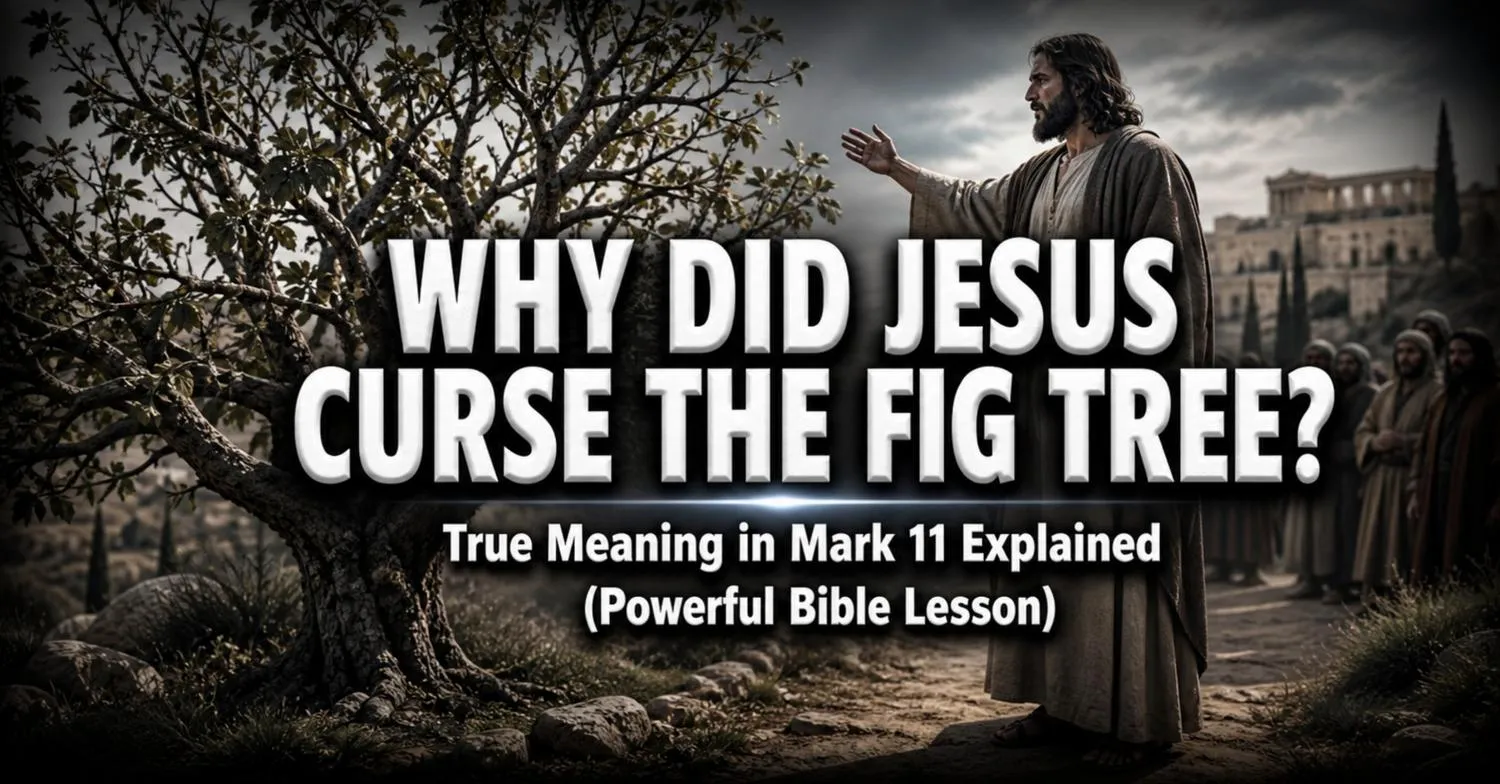
Why did Jesus curse the fig tree? At first glance, this moment in the Bible can feel confusing even troubling. Why would Jesus, known for compassion and miracles, curse a tree that simply had no fruit?
The answer isn’t about hunger or frustration. Instead, this event in Mark 11 carries a deep spiritual meaning that many readers miss. It reveals a powerful message about faith, authenticity, and spiritual fruitfulness.
In this short guide, you’ll clearly understand what really happened, why Jesus cursed the fig tree, and what this lesson means for your life today without confusion or unnecessary complexity.
The Story of Jesus Cursing the Fig Tree (Mark 11 Explained)
What Happened in Mark 11:12–14
Jesus was traveling with His disciples when He saw a fig tree in the distance. It had leaves, which normally suggested it should have fruit. But when He came closer, He found nothing except leaves.
In response, Jesus said, “May no one ever eat fruit from you again.” This wasn’t a random reaction it was intentional and symbolic. The presence of leaves created an expectation, but the tree failed to produce what it appeared to promise.
What Happened the Next Day
The next day, as they passed by the same tree, the disciples noticed something surprising the fig tree had withered from the roots.
This confirmed that Jesus’ words carried authority and purpose. It wasn’t just about the tree itself, but about demonstrating a deeper spiritual truth that would soon be explained through His teachings.
Why Did Jesus Curse the Fig Tree? (Core Meaning)
Not About Hunger
At first, it may seem like Jesus cursed the fig tree out of disappointment or hunger. But that interpretation doesn’t hold up. Jesus was intentional in everything He did. This act was not emotional it was purposeful.
In fact, the timing matters. The fig tree had leaves, which typically signal early fruit. So the issue wasn’t the season it was the false appearance of fruitfulness.
A Symbol of Spiritual Fruitlessness
The fig tree looked healthy from a distance, but up close, it had nothing to offer. This becomes a clear picture of spiritual life.
- Leaves represent outward appearance
- Fruit represents genuine faith and action
Jesus used this moment to highlight a serious issue: it’s possible to look spiritually alive while being empty inside.
Warning Against Hypocrisy
This event also connects to what Jesus was addressing at that time religious hypocrisy. Many people, especially religious leaders, appeared righteous outwardly but lacked true faith and obedience.
The cursed fig tree became a living example of this warning:
- External religion without inner transformation
- Appearance without substance
- Faith without results
Through this act, Jesus wasn’t just dealing with a tree He was teaching a powerful lesson about authenticity and accountability in spiritual life.
Why Did Jesus Curse the Barren Fig Tree?
Meaning of “Barren” in the Bible
In biblical language, a barren tree isn’t just unproductive it represents a life that fails to fulfill its purpose. Throughout Scripture, fruit is often used as a symbol of righteous living, obedience, and visible faith.
So when Jesus encountered a barren fig tree, it pointed beyond agriculture. It reflected a deeper spiritual condition having the form of life, but lacking its true essence.
Appearance vs Reality
The fig tree had leaves, which created an expectation of fruit. But in reality, it had nothing. This contrast is central to understanding why Jesus cursed the barren fig tree.
It highlights a powerful truth:
- Outward appearance can be misleading
- Spiritual life is measured by fruit, not image
This applies directly to faith today. It’s possible to look committed through words, rituals, or identity yet lack genuine transformation.
Jesus used the barren fig tree as a clear, visual warning:
God is not looking for appearance He is looking for real, lasting fruit.
Symbolism of the Fig Tree in the Bible
Fig Tree Represents Israel
In the Bible, the fig tree is often used as a symbol of Israel. Prophets in the Old Testament described Israel as a fig tree that was expected to produce fruit meaning justice, faithfulness, and obedience to God.
So when Jesus approached the fig tree and found no fruit, it reflected a bigger reality. The nation looked spiritually active on the outside but lacked true righteousness within.
A Message to Religious Leaders
This moment also directly connects to the religious leaders of that time. They maintained outward traditions, rituals, and authority but many lacked genuine faith and humility.
By cursing the fig tree, Jesus was delivering a clear message:
- Religious activity alone is not enough
- God sees beyond appearances
- Accountability comes with spiritual responsibility
This wasn’t just a miracle it was a symbolic act of warning. It exposed empty religion and called for real, authentic faith that produces visible fruit.
Key Lesson for Christians Today
God Expects Fruit
The central takeaway is simple but powerful: faith should produce visible results. In the Bible, “fruit” refers to actions, character, and obedience that reflect a genuine relationship with God.
This includes:
- Living with integrity
- Showing love, patience, and humility
- Practicing what you believe
It’s not about perfection but about real, growing faith that shows up in daily life.
Avoid Empty Religion
The fig tree looked alive but was empty. That’s the warning. It’s possible to follow routines, attend church, or speak the right words yet remain spiritually unfruitful.
Jesus calls for authenticity, not performance.
True faith is:
- Consistent, not just visible
- Rooted, not superficial
- Active, not passive
This lesson still applies today. It challenges you to move beyond appearance and live a faith that genuinely produces fruit.
Conclusion
So, why did Jesus curse the fig tree? It wasn’t an act of anger it was a powerful spiritual lesson. The tree looked alive but had no fruit, and that’s exactly what Jesus was addressing: appearance without reality.
This moment in Mark 11 reveals three clear truths:
- God expects real spiritual fruit, not just outward signs
- Faith without action is empty
- Authenticity matters more than religious appearance
The lesson is simple but serious. It’s not about how faith looks from the outside it’s about what it produces in your life.
In the end, the fig tree isn’t just a story. It’s a mirror calling every believer to examine their faith and live a life that truly bears fruit.

Hi, I’m Prashanta Kumbhar, a Christian blogger, faith writer, and the founder of Light and Gospel (LightandGospel.com), based in Odisha, India.
I regularly write Bible devotionals, prayers, Scripture reflections, and faith-based messages to encourage people in their daily walk with Jesus Christ and help them grow in hope, faith, and spiritual strength.
Along with blogging, I also create Christian content on my YouTube channel “The God Helps” and share faith, prayer, Bible study, and motivational messages across social media platforms like Facebook & Instagram. My mission is to make God’s Word simple, practical, & meaningful for everyday life.