
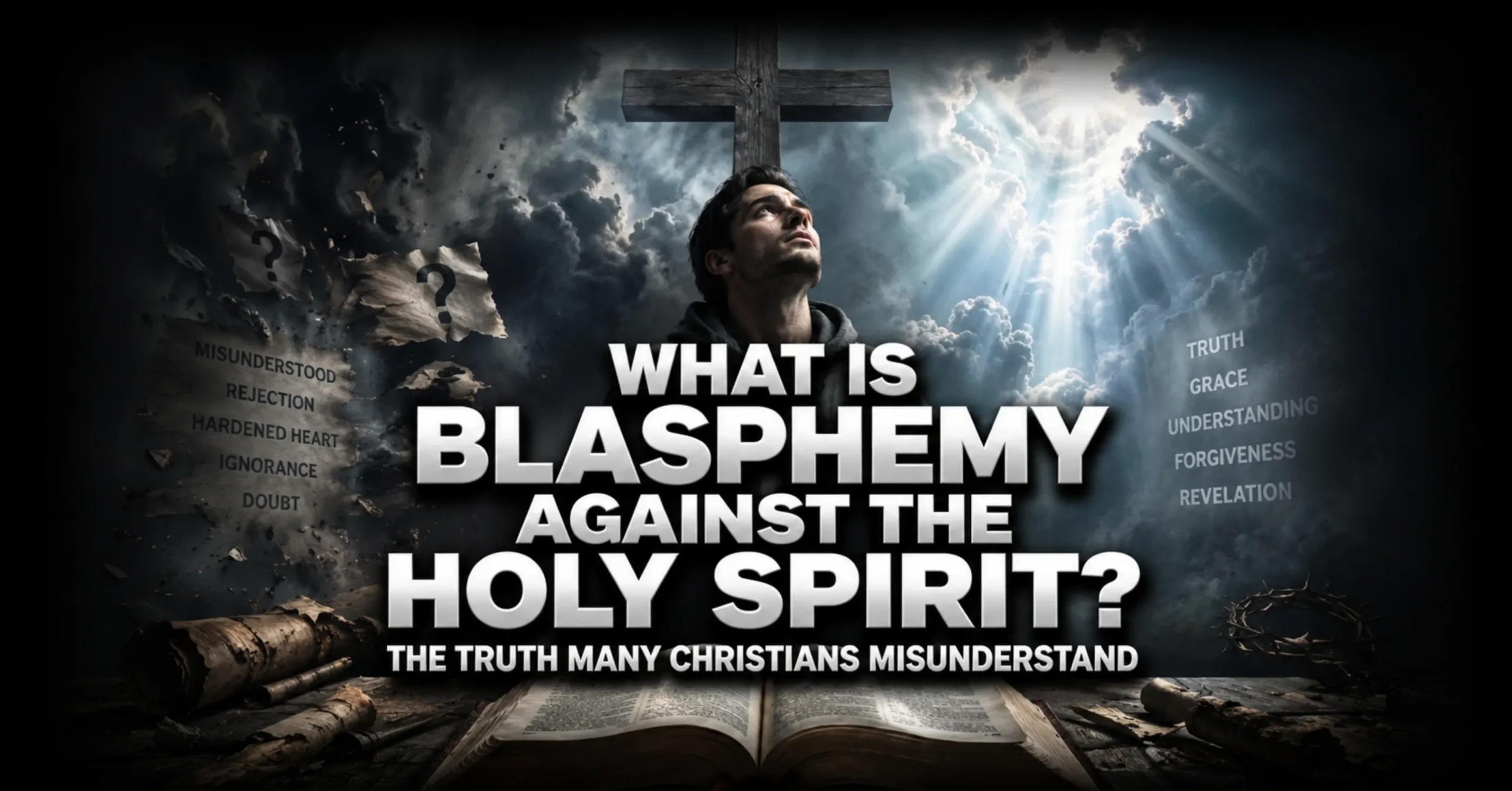
Many Christians become anxious when they hear the phrase what is blasphemy against the Holy Spirit. Some fear they may have committed an unforgivable sin without realizing it. Others wonder whether a careless word, a season of doubt, or a spiritual struggle could place them beyond God’s forgiveness.
Because Jesus spoke about this sin in very serious terms, it is understandable why so many believers have questions. However, when we examine the biblical context carefully, we discover that Jesus was not trying to create fear in sincere followers of God. Instead, He was warning against a specific and dangerous condition of the heart.
In simple terms, blasphemy against the Holy Spirit is the persistent and deliberate rejection of the Holy Spirit’s testimony about Jesus Christ. It is not a single mistake, an intrusive thought, or a moment of weakness. Rather, it describes a person who continually resists God’s truth and refuses to repent despite clear conviction.
Understanding this doctrine correctly is important because it brings both clarity and peace. Many people live with unnecessary fear because they misunderstand what Jesus actually taught.
What Is Blasphemy Against the Holy Spirit?
The Holy Spirit plays a central role in God’s plan of salvation. According to Scripture, the Holy Spirit convicts people of sin, reveals the truth about Jesus Christ, and draws individuals toward repentance and faith.
When a person repeatedly rejects that conviction, their heart can gradually become hardened. Over time, they may become resistant to God’s truth and unwilling to respond to His call.
Blasphemy against the Holy Spirit refers to this ongoing and deliberate resistance to God’s work. It is not an accidental action but a settled attitude of unbelief and rejection.
In simple language, it means:
- Continually rejecting God’s truth.
- Refusing to repent despite conviction.
- Persistently resisting the work of the Holy Spirit.
- Deliberately turning away from Jesus Christ.
The seriousness of this sin lies not in a single act but in a heart that continually refuses God’s grace.
The Biblical Context of Matthew 12:31–32
To understand this teaching correctly, we must examine the context in which Jesus spoke these words.
In Matthew 12, Jesus performed a miraculous healing by the power of the Holy Spirit. The people were amazed and began asking whether Jesus could be the promised Messiah.
The Pharisees, however, responded differently. Instead of acknowledging God’s power, they accused Jesus of casting out demons by the power of Satan.
Although they witnessed undeniable evidence of God’s work, they deliberately rejected the truth. Rather than submitting to what was clearly revealed, they chose to oppose it.
It was in response to this accusation that Jesus issued His warning about blasphemy against the Holy Spirit.
The issue was not ignorance. The issue was willful rejection of truth despite overwhelming evidence.
Why Did Jesus Call It Unforgivable?
One of the most difficult parts of this teaching is Jesus’ statement that blasphemy against the Holy Spirit will not be forgiven.
At first glance, this may seem to contradict the Bible’s message of grace and forgiveness. Throughout Scripture, God repeatedly offers mercy to sinners who repent and turn to Him.
The key to understanding Jesus’ warning is repentance.
Forgiveness is available to those who acknowledge their sin and seek God’s mercy. However, a person who continually rejects the Holy Spirit’s conviction eventually reaches a state where they no longer desire repentance.
The problem is not that God’s mercy becomes unavailable. The problem is that the individual refuses to receive it.
This is why the sin is described as unforgivable. A hardened heart continually rejects the very One who leads people to forgiveness.
What Is Considered Blasphemy Against the Holy Spirit?
The Bible does not present this sin as a list of forbidden words or isolated actions. Instead, it focuses on the attitude of the heart.
According to biblical teaching, blasphemy against the Holy Spirit includes:
- Knowingly rejecting God’s truth.
- Deliberately resisting the Holy Spirit’s conviction.
- Refusing to believe despite clear understanding.
- Persistently opposing God’s work.
- Remaining unrepentant even after receiving spiritual light.
The Pharisees provide the clearest example. They witnessed Jesus’ miracles and understood their significance, yet they still chose to reject Him.
Their actions revealed a heart that was resistant to God’s truth.
Common Misunderstandings About This Sin
Many Christians fear they may have committed this sin because of common misunderstandings.
The Bible does not teach that blasphemy against the Holy Spirit is:
- A careless statement spoken in anger.
- A passing season of doubt.
- Spiritual confusion.
- Questions about faith.
- A temporary backsliding experience.
- Intrusive or unwanted thoughts.
- Struggles with temptation.
Believers often experience weakness, fear, and spiritual battles. These experiences do not place someone beyond God’s forgiveness.
The difference lies in the response of the heart.
A repentant heart still desires God. A hardened heart rejects Him completely.
Examples of Blasphemy Against the Holy Spirit
The clearest biblical example comes from the Pharisees in Matthew 12.
They witnessed God’s power firsthand. They saw lives transformed and miracles performed. Yet instead of acknowledging the work of the Holy Spirit, they attributed it to Satan.
Their response demonstrated:
- Knowledge of the truth.
- Deliberate rejection of the truth.
- Persistent opposition to God’s work.
This example shows why the issue is far deeper than merely speaking wrong words. It involves a conscious and ongoing rejection of what God is clearly revealing.
Can Someone Commit This Sin Today?
Many theologians believe the principle behind Jesus’ warning still applies today.
Whenever a person continually rejects the Holy Spirit’s conviction, refuses to repent, and persists in unbelief, they move further away from God’s truth.
However, it is important to remember that concern about committing this sin is usually evidence that a person has not committed it.
Someone whose heart has become completely hardened does not typically worry about offending God or losing His forgiveness.
The very fact that a person desires reconciliation with God is often a sign that the Holy Spirit is still working in their life.
A Message of Hope for Worried Believers
Many sincere Christians become fearful after reading Matthew 12. They worry that a past mistake, a period of doubt, or a careless statement may have separated them from God’s grace forever.
The Bible offers a different picture.
Throughout Scripture, God consistently invites sinners to repent and receive forgiveness. His mercy is extended to those who come to Him with humble and sincere hearts.
If you are concerned about your relationship with God, desire His forgiveness, and want to follow Christ, those are encouraging signs that the Holy Spirit is still at work within you.
God’s grace remains available to everyone who turns to Him in faith.
Conclusion
When understood in its proper biblical context, blasphemy against the Holy Spirit is not a single mistake, careless word, or moment of weakness. It is a persistent and deliberate rejection of the Holy Spirit’s testimony about Jesus Christ.
Jesus gave this warning to people who repeatedly resisted God’s truth despite clearly witnessing His work. Their problem was not ignorance but a hardened heart that refused repentance.
For believers who fear they may have committed this sin, Scripture offers reassurance. A heart that seeks God, desires forgiveness, and responds to conviction is very different from a heart that has completely rejected Him.
The central message of the Bible is not fear but grace. God continues to call people to repentance, faith, and restoration. Rather than living in anxiety, believers can respond to God’s truth with humility, confidence, and trust in His unfailing mercy.
FAQ
What is blasphemy against the Holy Spirit in simple terms?
It is the persistent and deliberate rejection of the Holy Spirit’s testimony about Jesus Christ and refusal to repent despite knowing the truth.
Can blasphemy against the Holy Spirit be forgiven?
Jesus described it as unforgivable because a person continually rejects the Holy Spirit’s conviction and refuses repentance.
Have I committed the unforgivable sin?
If you are concerned about offending God and desire His forgiveness, it is a strong sign that your heart has not completely rejected Him.
What did Jesus mean in Matthew 12:31–32?
Jesus warned against knowingly rejecting God’s work and attributing the Holy Spirit’s work to evil despite clear evidence.
Is blasphemy against the Holy Spirit a careless word?
No. The Bible presents it as a hardened and persistent rejection of God’s truth, not a single careless statement or moment of weakness.

Hi, I’m Prashanta Kumbhar, a Christian blogger, faith writer, and the founder of Light and Gospel (LightandGospel.com), based in Odisha, India.
I regularly write Bible devotionals, prayers, Scripture reflections, and faith-based messages to encourage people in their daily walk with Jesus Christ and help them grow in hope, faith, and spiritual strength.
Along with blogging, I also create Christian content on my YouTube channel “The God Helps” and share faith, prayer, Bible study, and motivational messages across social media platforms like Facebook & Instagram. My mission is to make God’s Word simple, practical, & meaningful for everyday life.