
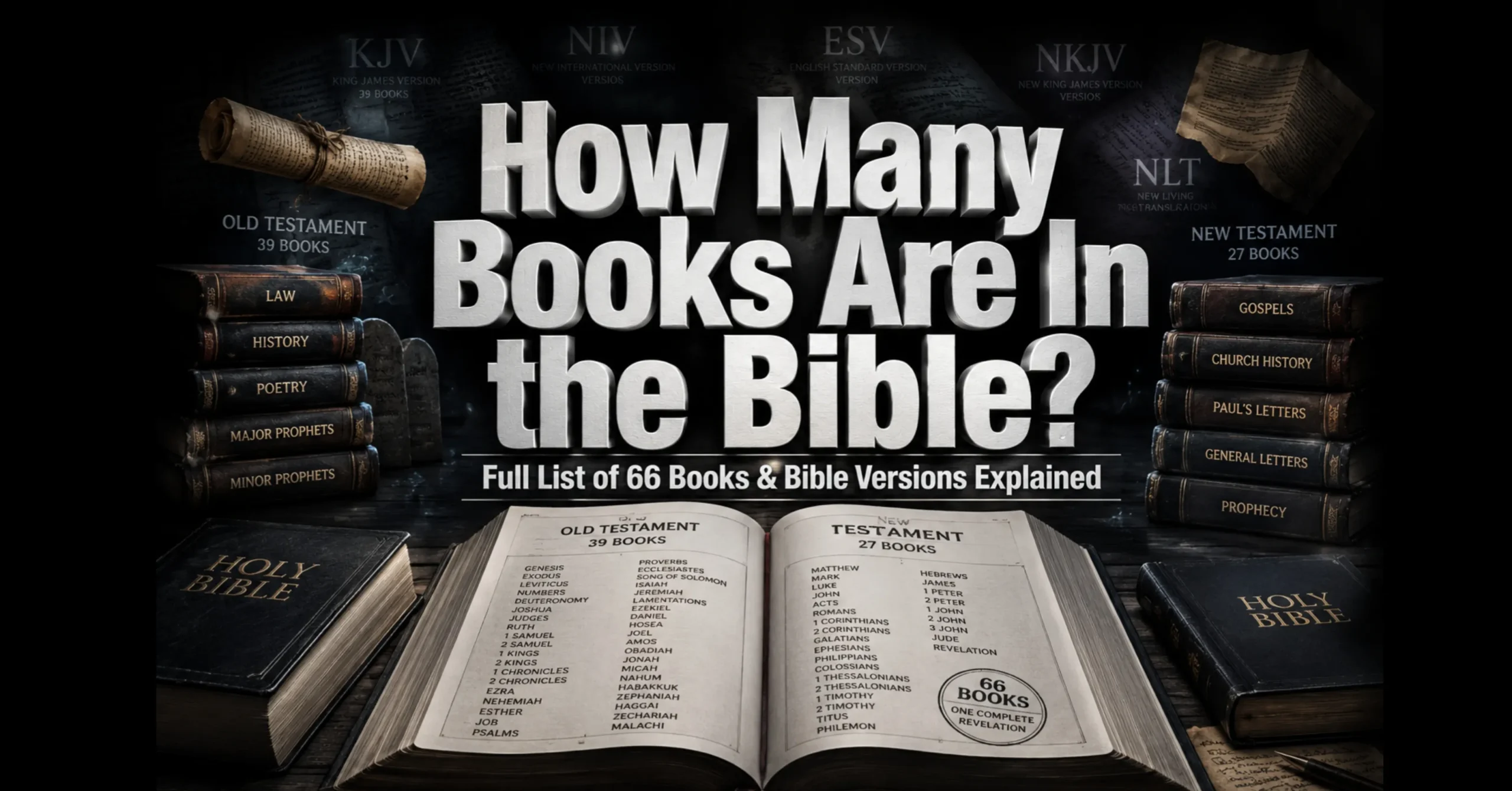
Many people ask, “How many books are in the Bible?” The answer may seem simple, but different Christian traditions use different biblical canons. The Protestant Bible contains 66 books, while Catholic, Orthodox, and Ethiopian Bibles include additional writings.
Understanding these differences helps readers study Scripture with more clarity and confidence. In this guide, you will learn how many books are in the Bible, how the Old and New Testaments are divided, and why some Bibles contain more books than others.
For easy reading, this article also includes simple charts and organized book lists with serial numbers and names. This makes the structure of the Holy Bible easier to understand for beginners, students, and devoted Bible readers alike.
How Many Books Are in the Bible? (With Complete Book List)
The how many books are in the bible question is best answered by starting with the most widely accepted Christian canon. The Protestant Bible contains 66 books in total.
Full Bible Book List (Protestant Canon – 66 Books)
Old Testament Books (39 Books)
The Old Testament is the first major section of the Bible. It contains history, laws, poetry, and prophecy.
| No. | Book Name |
|---|---|
| 1–39 | Genesis to Malachi (39 books total) |
What it includes:
- Creation story
- History of Israel
- Laws given to Moses
- Prophetic messages
| No. | Book Name |
|---|---|
| 1 | Genesis |
| 2 | Exodus |
| 3 | Leviticus |
| 4 | Numbers |
| 5 | Deuteronomy |
| 6 | Joshua |
| 7 | Judges |
| 8 | Ruth |
| 9 | 1 Samuel |
| 10 | 2 Samuel |
| 11 | 1 Kings |
| 12 | 2 Kings |
| 13 | 1 Chronicles |
| 14 | 2 Chronicles |
| 15 | Ezra |
| 16 | Nehemiah |
| 17 | Esther |
| 18 | Job |
| 19 | Psalms |
| 20 | Proverbs |
| 21 | Ecclesiastes |
| 22 | Song of Solomon |
| 23 | Isaiah |
| 24 | Jeremiah |
| 25 | Lamentations |
| 26 | Ezekiel |
| 27 | Daniel |
| 28 | Hosea |
| 29 | Joel |
| 30 | Amos |
| 31 | Obadiah |
| 32 | Jonah |
| 33 | Micah |
| 34 | Nahum |
| 35 | Habakkuk |
| 36 | Zephaniah |
| 37 | Haggai |
| 38 | Zechariah |
| 39 | Malachi |
New Testament Books (27 Books)
The New Testament focuses on the life of Jesus Christ and the early church.
| No. | Book Name |
|---|---|
| 40–66 | Matthew to Revelation (27 books total) |
What it includes:
- Life and teachings of Jesus
- Acts of apostles
- Letters (Epistles)
- Prophecy of end times
| No. | Book Name |
|---|---|
| 40 | Matthew |
| 41 | Mark |
| 42 | Luke |
| 43 | John |
| 44 | Acts |
| 45 | Romans |
| 46 | 1 Corinthians |
| 47 | 2 Corinthians |
| 48 | Galatians |
| 49 | Ephesians |
| 50 | Philippians |
| 51 | Colossians |
| 52 | 1 Thessalonians |
| 53 | 2 Thessalonians |
| 54 | 1 Timothy |
| 55 | 2 Timothy |
| 56 | Titus |
| 57 | Philemon |
| 58 | Hebrews |
| 59 | James |
| 60 | 1 Peter |
| 61 | 2 Peter |
| 62 | 1 John |
| 63 | 2 John |
| 64 | 3 John |
| 65 | Jude |
| 66 | Revelation |
- Old Testament = 39 books
- New Testament = 27 books
- Total Bible books = 66
This structure is the foundation for most Protestant Christian Bibles and helps readers understand the complete flow of Scripture from creation to Revelation.
Simple Insight
- Old Testament = Foundation of faith and prophecy
- New Testament = Fulfillment in Jesus Christ
- Together they form the complete Christian Bible
Bible Book Counts by Christian Tradition
Different Christian traditions do not all use the same Bible structure. This is why the answer to how many books are in the bible changes depending on the church tradition. Each group follows a slightly different biblical canon based on history and acceptance of certain texts.
Catholic Bible (73 Books)
| No. | Category | Book Count |
|---|---|---|
| 1 | Old Testament | 46 |
| 2 | New Testament | 27 |
| 3 | Total | 73 |
- Includes Deuterocanonical books like Tobit, Judith, Wisdom, Sirach, Baruch
- Used in Roman Catholic tradition
- Same New Testament as Protestant Bible
Orthodox Bible (76–81 Books)
| Tradition | Book Count |
|---|---|
| Greek Orthodox | ~76 |
| Eastern Orthodox (some canons) | up to 81 |
- Includes additional ancient Jewish writings
- Canon varies slightly by region
- Strong historical manuscript tradition
Ethiopian Bible (81 Books)
| Tradition | Book Count |
|---|---|
| Ethiopian Orthodox | 81 books |
- One of the largest Bible canons
- Includes unique books not found in other Bibles
- Very ancient Christian tradition
Simple Comparison Table
| Bible Tradition | Number of Books |
|---|---|
| Protestant | 66 |
| Catholic | 73 |
| Orthodox | 76–81 |
| Ethiopian | 81 |
- The difference is mainly due to which ancient books are accepted as Scripture
- No New Testament difference, only Old Testament variations
- These variations help explain why Bible versions are not identical worldwide
Why Do Different Bibles Have Different Numbers of Books?
The question how many books are in the bible becomes confusing because not every Christian tradition follows the same biblical canon. The differences are not about changing Scripture, but about which ancient writings are accepted as inspired.
Understanding the Biblical Canon
The biblical canon means the official list of books accepted as Scripture.
- Different early Christian communities used different manuscripts
- Over time, churches made decisions about which books to include
- This is why Catholic, Orthodox, and Protestant Bibles differ
Key idea: The Bible was not compiled in one single moment.
Role of Tradition and History
- Catholic Church recognizes additional Old Testament books
- Protestant Reformers later kept only Hebrew-based Old Testament books
- Orthodox and Ethiopian churches preserved broader ancient collections
Result: Different historical paths created different Bible sizes.
What Are Deuterocanonical Books?
These are books included in Catholic and Orthodox Bibles but not in Protestant Bibles.
Examples:
- Tobit
- Judith
- Wisdom of Solomon
- Sirach
- Baruch
These books explain why Catholic Bible has more books.
Simple Understanding Point
- Same faith message
- Different book collections
- Differences mainly in Old Testament writings
Quick Insight Table
| Reason | Impact on Bible Books |
|---|---|
| Canon decisions | Different book lists |
| Church traditions | Different acceptance rules |
| Historical manuscripts | Variation in Old Testament |
Summary
Different Bibles have different book counts because early Christians preserved and accepted different sets of sacred writings. The message of faith remains the same, but the collection of books varies.
KJV, NIV, and Hebrew Bible Comparison
Different Bible translations also confuse readers searching how many books are in the bible. The message remains the same, but structure and canon differ.
King James Version (KJV Bible)
- 66 books
- Based on Protestant canon
- Early editions included Apocrypha
NIV Bible
- 66 books
- Simple modern English translation
- Follows Protestant canon
Hebrew Bible (Tanakh)
Arranged as Torah, Prophets, Writings
24 books
Same content as Old Testament
Quick Comparison Table
| Bible Type | Books |
|---|---|
| KJV Bible | 66 |
| NIV Bible | 66 |
| Hebrew Bible | 24 |
Conclusion
The Bible is not just a single book but a collection of sacred writings. The most common answer is 66 books, but Catholic, Orthodox, and Ethiopian traditions include more.
Understanding these differences helps readers:
- Read Scripture with clarity
- Respect different Christian traditions
- Understand the history behind the Bible

Hi, I’m Prashanta Kumbhar, a Christian blogger, faith writer, and the founder of Light and Gospel (LightandGospel.com), based in Odisha, India.
I regularly write Bible devotionals, prayers, Scripture reflections, and faith-based messages to encourage people in their daily walk with Jesus Christ and help them grow in hope, faith, and spiritual strength.
Along with blogging, I also create Christian content on my YouTube channel “The God Helps” and share faith, prayer, Bible study, and motivational messages across social media platforms like Facebook & Instagram. My mission is to make God’s Word simple, practical, & meaningful for everyday life.