
How Did Samuel Die in the Bible?
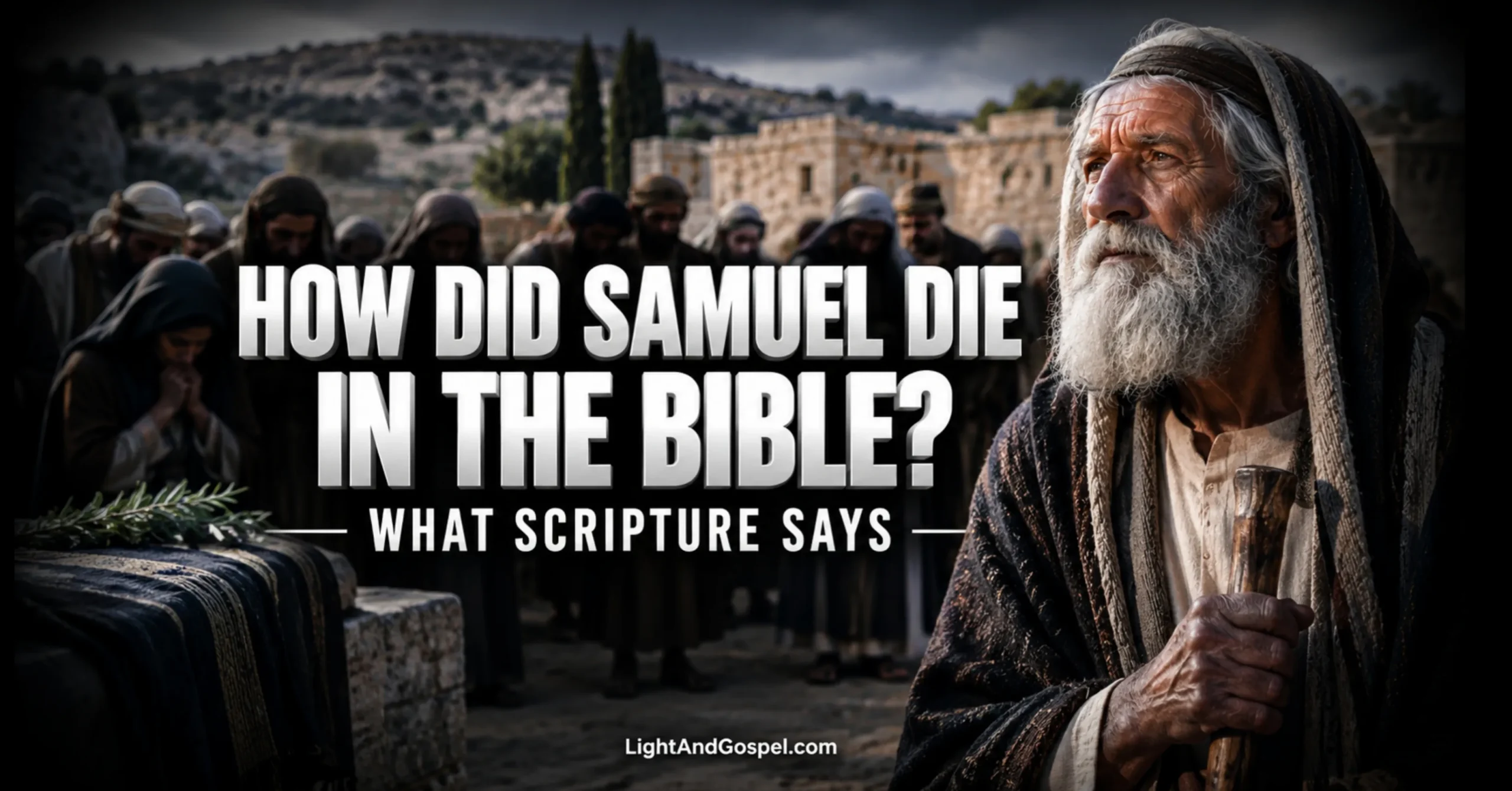
The Bible tells us that Samuel died, all Israel mourned for him, and he was buried at his home in Ramah (1 Samuel 25:1). However, Scripture does not explain the cause of his death or state his age.
Samuel was an important prophet and leader in Israel. He anointed Saul as king and later anointed David, who eventually ruled over Judah and all Israel. Yet the biblical account of Samuel’s death is brief and leaves several questions unanswered.
The clearest answer to how did Samuel die in the Bible is that Scripture records his death but does not explain how it happened.
What Does the Bible Say About Samuel’s Death?
First Samuel 25:1 (NIV) records three details: Samuel died, all Israel mourned for him, and he was buried at his home in Ramah.
Samuel died
First Samuel 25:1 confirms Samuel’s death but does not describe his final moments or its cause. The account moves directly to David’s journey into the Desert of Paran.
Samuel began serving the Lord as a boy at the tabernacle under Eli (1 Samuel 3). He later became a prophet and judge, delivering God’s message and guiding Israel through a period of change.
He also played a central role in Israel’s monarchy. Samuel anointed Saul as king (1 Samuel 10:1) and later anointed David at God’s direction (1 Samuel 16:1–13). However, the Bible does not record the circumstances surrounding Samuel’s death.
All Israel mourned for him
First Samuel 25:1 says that all Israel mourned for Samuel. This shows that his death was a significant loss for the nation.
Samuel had served as a spiritual leader for many years, and the account emphasizes the people’s response to his death. However, it does not specify how long they mourned or describe the details of their gathering.
Samuel was buried in Ramah
The same verse says Samuel was buried at his home in Ramah. The town was closely connected with his life and ministry. According to 1 Samuel 7:17, Ramah was his home, and he judged Israel there.
The Bible does not describe Samuel’s burial ceremony or identify everyone who attended. It also does not say whether David was present. Although David appears in the surrounding account, his attendance at Samuel’s burial is not confirmed.
In short, Scripture tells us that Samuel died, Israel mourned for him, and he was buried in Ramah. It does not reveal the cause of his death or provide further details about his final days.
Does the Bible Explain the Cause of Samuel’s Death?
No. The Bible does not explain what caused Samuel’s death.
First Samuel 25:1 records his death and burial but does not say whether he died from an illness, an accident, violence, or another cause.
Samuel described himself as old and gray in 1 Samuel 12:2. This suggests that he was elderly at the time of that speech, but it does not establish how he later died.
The Bible also does not say that Saul killed, arrested, or captured Samuel. Although the two had a difficult relationship, the biblical account provides no evidence that Saul caused Samuel’s death.
The distinction is important: Scripture confirms that Samuel died and was buried in Ramah, but it does not reveal the cause of his death.
How Old Was Samuel When He Died?
The Bible does not give Samuel’s exact age at death. Although it describes his life and ministry, it provides no specific number.
In 1 Samuel 12:2 (NIV), Samuel tells the Israelites that he has grown old and gray. This indicates that he considered himself elderly, but it does not tell us how old he was.
That speech also occurs before the account of his death in 1 Samuel 25:1. The text does not provide enough information to calculate his exact age when he died.
If a source gives a specific age for Samuel, check whether it provides reliable evidence for that number. The Bible itself does not state his age at death.
The most accurate conclusion is that Samuel was old and gray at the time of his speech, but the number of years he lived remains unknown.
Did Samuel Die Before David Became King?
Yes. Samuel died before David became king over Judah and later over all Israel. Samuel anointed David years before David began his reign.
Samuel anointed David before his own death
In 1 Samuel 16:1–13, God sends Samuel to Bethlehem to anoint one of Jesse’s sons. Samuel chooses David, the youngest, and anoints him according to God’s direction.
David does not become king immediately. Saul remains king, and David’s rise to leadership takes place over time. Samuel’s death is recorded later in 1 Samuel 25:1.
David became king in two stages
After Saul’s death, David became king over Judah. Second Samuel 2:4 records his anointing by the men of Judah.
Saul’s death in battle is another important event in Israel’s history. Read more about kings who died in battle and the biblical accounts of their deaths.
David later became king over all Israel. In 2 Samuel 5:3, the elders of Israel made a covenant with David and anointed him king.
The biblical timeline is clear:
- 1 Samuel 16:1–13: Samuel anoints David.
- 1 Samuel 25:1: Samuel dies and is buried in Ramah.
- 2 Samuel 2:4: David becomes king over Judah.
- 2 Samuel 5:3: David becomes king over all Israel.
Samuel therefore died before David began his reign. Scripture does not establish David’s exact age at Samuel’s death.
For more about David’s life and rise to kingship, read David’s life and rise to kingship.
Why Is Samuel Mentioned Again in 1 Samuel 28?
Samuel’s death is mentioned again in 1 Samuel 28:3 (NIV). The verse confirms that Samuel was dead, that Israel had mourned for him, and that he had been buried in Ramah.
This reference appears before the account of Saul seeking a medium at Endor. Facing a Philistine military threat, Saul was looking for guidance, but Samuel had already died.
The verse provides no new details about Samuel’s death. It does not explain its cause, give his age, or describe his final moments. It establishes that Samuel was dead before the events involving Saul and the medium.
Christians differ in how they interpret aspects of the Endor episode, but those questions do not change what the verse says about Samuel’s death. It offers no evidence that Saul caused his death.
Conclusion: What We Know About Samuel’s Death
According to 1 Samuel 25:1, Samuel died, all Israel mourned for him, and he was buried at his home in Ramah. Scripture does not reveal his cause of death or exact age. Although Samuel described himself as old and gray in 1 Samuel 12:2, the Bible does not tell us how many years he lived.
Samuel also anointed David before his death, but David became king over Judah and later over all Israel afterward.
So, how did Samuel die in the Bible? The text confirms his death but leaves the cause unknown. The most accurate answer is to stay with what Scripture says rather than present speculation as fact.

Hi, I’m Prashanta Kumbhar, a Christian blogger, faith writer, and the founder of Light and Gospel (LightandGospel.com), based in Odisha, India.
I regularly write Bible devotionals, prayers, Scripture reflections, and faith-based messages to encourage people in their daily walk with Jesus Christ and help them grow in hope, faith, and spiritual strength.
Along with blogging, I also create Christian content on my YouTube channel “The God Helps” and share faith, prayer, Bible study, and motivational messages across social media platforms like Facebook & Instagram. My mission is to make God’s Word simple, practical, & meaningful for everyday life.