
Every year, millions of Christians around the world observe one of the most important periods in their faith Holy Week. But many people still search for a clear and simple explanation of what it truly means. This guide on Holy Week explained will help you understand its deep spiritual significance, the events that took place, and how each day connects to the life of Jesus Christ.
Whether you’re looking for a basic understanding, a day-by-day breakdown, or a simplified version for learning, this article covers everything in a clear and meaningful way. By the end, you’ll fully understand each day of Holy Week explained and why it matters so much in Christianity.
What is Holy Week? (Simple Explanation)
Definition of Holy Week
Holy Week is the most sacred week in Christianity, marking the final days of Jesus Christ’s life on earth before His resurrection. It begins with Palm Sunday and ends with Easter Sunday.
In simple terms, Holy Week is a time when Christians remember:
- Jesus’ arrival in Jerusalem
- His teachings and final moments
- His crucifixion and sacrifice
- His resurrection and victory over death
This period is not just historical it carries deep spiritual meaning about love, sacrifice, and redemption.
When is Holy Week Celebrated?
Holy Week is observed during the last week of Lent, leading up to Easter Sunday. The exact dates change every year because they are based on the lunar calendar.
It always begins on Palm Sunday and ends on Easter Sunday, typically falling between March and April.
For believers, this week is not just about dates it’s a spiritual journey of reflection, prayer, and preparation for celebrating the resurrection of Jesus.
Why is Holy Week Important?
Holy Week holds the core message of Christianity. It represents the foundation of faith Jesus’ sacrifice for humanity and His resurrection.
Here’s why it is so important:
- It shows God’s love: Jesus willingly gave His life for humanity
- It teaches sacrifice: A reminder of selflessness and obedience
- It brings hope: The resurrection symbolizes victory over sin and death
- It strengthens faith: Encourages believers to reflect and grow spiritually
For many Christians, this week is a time to pause, reflect, and reconnect with their faith on a deeper level.
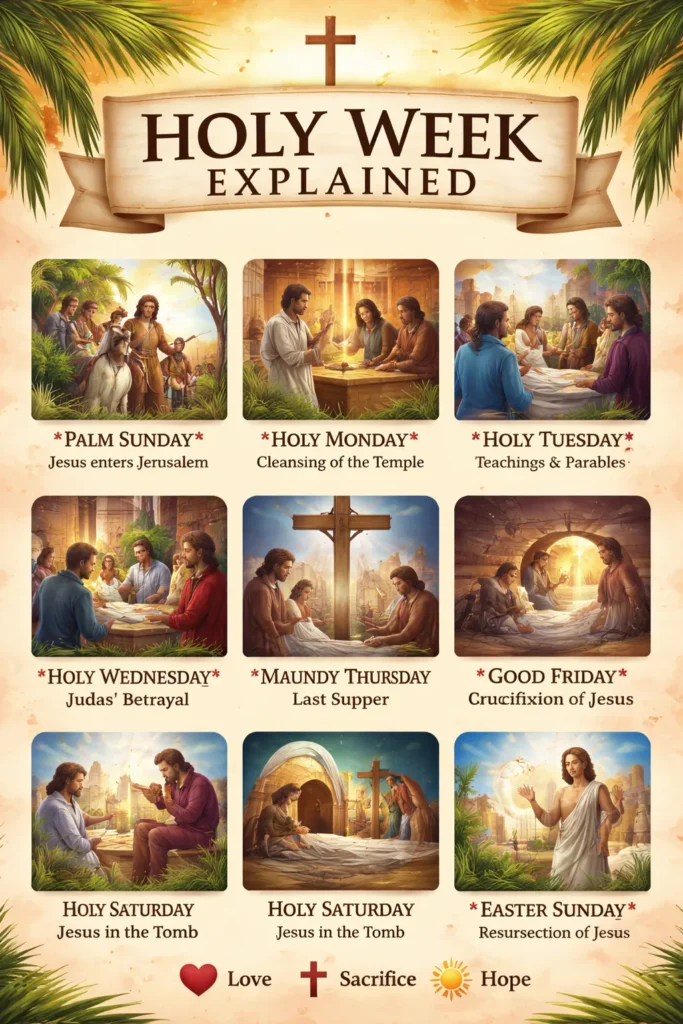
Each Day of Holy Week Explained (Complete Timeline)
Palm Sunday Explained
Palm Sunday marks the beginning of Holy Week. On this day, Jesus entered Jerusalem riding on a donkey, and people welcomed Him by laying palm branches on the road.
This event symbolizes:
- Humility: Jesus came as a peaceful king, not a warrior
- Recognition: People honored Him as the Messiah
However, it also shows how quickly people’s loyalty can change many who praised Him would later reject Him.
Holy Monday Explained
On Holy Monday, Jesus cleansed the temple by driving out those who were buying and selling.
This moment teaches:
- Purity in worship: God’s house should be respected
- Spiritual cleansing: Remove corruption from our lives
It’s a strong reminder that faith should be sincere, not driven by profit or selfish motives.
Holy Tuesday Explained
Holy Tuesday is known for Jesus’ teachings and debates with religious leaders. He shared important parables and warned against hypocrisy.
Key meaning:
- Truth and wisdom: Jesus taught openly and boldly
- Warning against hypocrisy: Faith must be genuine
This day highlights the importance of living out what we believe.
Holy Wednesday Explained
Holy Wednesday is often called “Spy Wednesday,” the day Judas Iscariot agreed to betray Jesus.
Spiritual lessons:
- Betrayal and sin: Even close followers can fall
- Human weakness: A reminder to stay spiritually alert
It’s a day that reflects the reality of temptation and the need for faithfulness.
Maundy Thursday Explained
Maundy Thursday remembers the Last Supper, where Jesus shared a final meal with His disciples.
Important events:
- The Last Supper: Jesus instituted Holy Communion
- Washing of feet: A lesson in humility and service
The word “Maundy” comes from the commandment Jesus gave: to love one another.
Good Friday Explained
Good Friday is the day Jesus was crucified. It is one of the most solemn days in Christianity.
Meaning behind this day:
- Sacrifice: Jesus gave His life for humanity’s sins
- Redemption: Through His death, salvation became possible
Though it is a day of sorrow, it carries a powerful message of love and forgiveness.
Holy Saturday Explained
Holy Saturday is a quiet day of waiting and reflection. Jesus’ body lay in the tomb, and His followers mourned.
This day represents:
- Silence and patience: Trusting God even in uncertainty
- Hope in darkness: Waiting for what is to come
It teaches believers to remain faithful even when answers are not visible.
Easter Sunday Explained
Easter Sunday celebrates the resurrection of Jesus from the dead. It is the most joyful day of Holy Week.
Core meaning:
- Victory over death: Jesus conquered sin and death
- New life: A symbol of hope and renewal
This day completes the journey of Holy Week and confirms the foundation of Christian faith.
Holy Week Days Explained (Quick Summary Table)
Day-by-Day Summary Table
Below is a simple and clear overview of Holy Week days explained in a quick format for easy understanding:
| Day | Event | Meaning |
|---|---|---|
| Palm Sunday | Jesus enters Jerusalem | Humility and kingship |
| Holy Monday | Cleansing of the temple | Purity and true worship |
| Holy Tuesday | Teachings and parables | Truth and spiritual awareness |
| Holy Wednesday | Judas plans betrayal | Warning against sin and betrayal |
| Maundy Thursday | Last Supper & washing of feet | Love, service, and humility |
| Good Friday | Crucifixion of Jesus | Sacrifice and redemption |
| Holy Saturday | Jesus in the tomb | Waiting and faith |
| Easter Sunday | Resurrection of Jesus | Victory and new life |
This table gives a quick snapshot of each day of Holy Week explained, helping readers easily remember the events and their meanings.
Holy Week Explained for Kids
Easy Explanation of Holy Week
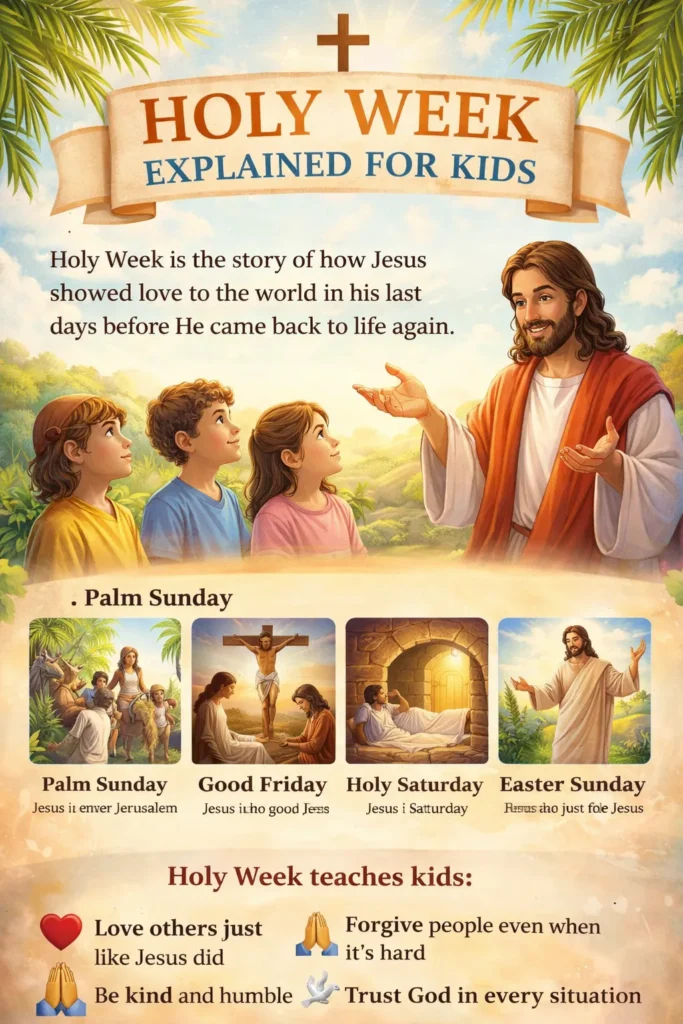
Holy Week is the story of how Jesus showed love to the world. It tells us what happened in the last days of His life before He came back to life again.
In simple words:
- Jesus came to help people
- He taught love, kindness, and forgiveness
- He gave His life to save others
- He came back to life to give hope to everyone
This makes Holy Week a very special time for Christians.
Each Day in Simple Words
Here’s Holy Week explained for kids in an easy way:
- Palm Sunday: Jesus came to the city and people welcomed Him happily
- Holy Monday: Jesus cleaned the temple and taught what is right
- Holy Tuesday: Jesus shared important lessons
- Holy Wednesday: One of His followers decided to betray Him
- Maundy Thursday: Jesus had His last meal with friends
- Good Friday: Jesus died on the cross for everyone
- Holy Saturday: Jesus was resting in the tomb
- Easter Sunday: Jesus came back to life 🎉
Key Lesson for Children
Holy Week teaches children some very important values:
- Love others just like Jesus did
- Forgive people even when it’s hard
- Be kind and humble
- Trust God in every situation
These lessons help children grow with strong faith and good character.
Catholic Holy Week Explained (Traditions & Practices)
Catholic Holy Week Overview
In the Catholic Church, Holy Week is observed with deep reverence, structured liturgy, and meaningful traditions. Each day is marked by special services that help believers walk spiritually with Jesus through His final journey.
Catholics focus on:
- Prayer and reflection
- Participation in church liturgy
- Remembering the passion, death, and resurrection of Jesus
This makes the week not just a remembrance, but a spiritual experience.
Important Rituals
Catholic Holy Week includes several important practices that hold deep meaning:
- Palm Sunday Mass: Blessing and distribution of palm branches
- Holy Thursday Mass (Last Supper): Includes the washing of feet
- Eucharistic Adoration: Spending time in prayer before the Blessed Sacrament
- Fasting and Abstinence: Especially observed on Good Friday
These rituals are not just traditions they help believers connect emotionally and spiritually with the events of Holy Week.
Good Friday & Easter Traditions
Two of the most significant days in Catholic Holy Week are Good Friday and Easter Sunday.
Good Friday:
- Church services focus on Jesus’ crucifixion
- No Mass is celebrated
- Veneration of the cross takes place
Easter Sunday:
- Joyful celebration of Jesus’ resurrection
- Special Mass with hymns and thanksgiving
- Symbolizes new life and hope
These traditions highlight the journey from sorrow to joy the heart of the Christian message.
What Do Christians Do During Holy Week?
Prayer and Reflection
During Holy Week, Christians intentionally slow down and spend more time in prayer. It’s a time to reflect on Jesus’ sacrifice and examine one’s own life.
Common practices include:
- Personal prayer and Bible reading
- Meditating on the events of Jesus’ final days
- Attending special church services
This helps believers build a deeper, more personal connection with God.
Fasting and Sacrifice
Fasting is an important part of Holy Week for many Christians. It is a way of practicing self-discipline and focusing more on spiritual growth.
This may include:
- Giving up certain foods or habits
- Avoiding distractions like social media or entertainment
- Making small sacrifices as an act of devotion
The purpose is not just physical sacrifice, but spiritual renewal and humility.
Church Services and Worship
Church attendance increases during Holy Week because of the special services held throughout the week.
These include:
- Palm Sunday service
- Maundy Thursday (Last Supper remembrance)
- Good Friday service (focused on the crucifixion)
- Easter Sunday celebration
These gatherings allow Christians to worship together and relive the key moments of their faith.
Lessons We Learn from Holy Week
Faith and Trust in God
Holy Week reminds believers to trust God even in difficult times. Witnessing Jesus’ journey encourages Christians to maintain faith through challenges.
Key takeaways:
- Stay faithful when outcomes are uncertain
- Believe in God’s plan even during hardship
- Strengthen personal relationship with God through reflection
Sacrifice and Love
Jesus’ actions during Holy Week teach the ultimate lesson of selfless love. His willingness to suffer for others is a model for all believers.
Practical application:
- Serve others without expecting anything in return
- Make sacrifices to help family, friends, or community
- Show compassion in daily life
Forgiveness and Redemption
Holy Week emphasizes the power of forgiveness and redemption. Jesus forgave those who wronged Him, showing that love and mercy are central to Christian life.
Lessons for today:
- Forgive people who have hurt you
- Seek reconciliation in broken relationships
- Embrace the hope of new beginnings through God’s grace
Conclusion
In summary, this guide on Holy Week explained has covered the full timeline, each day’s significance, Catholic traditions, and lessons for daily life. From Palm Sunday to Easter Sunday, Holy Week teaches faith, sacrifice, forgiveness, and hope. By reflecting on these events, believers can deepen their spiritual understanding and strengthen their connection with God.
This article provides a comprehensive view of each day of Holy Week explained, ensuring readers gain both knowledge and practical insights for meaningful observance.