
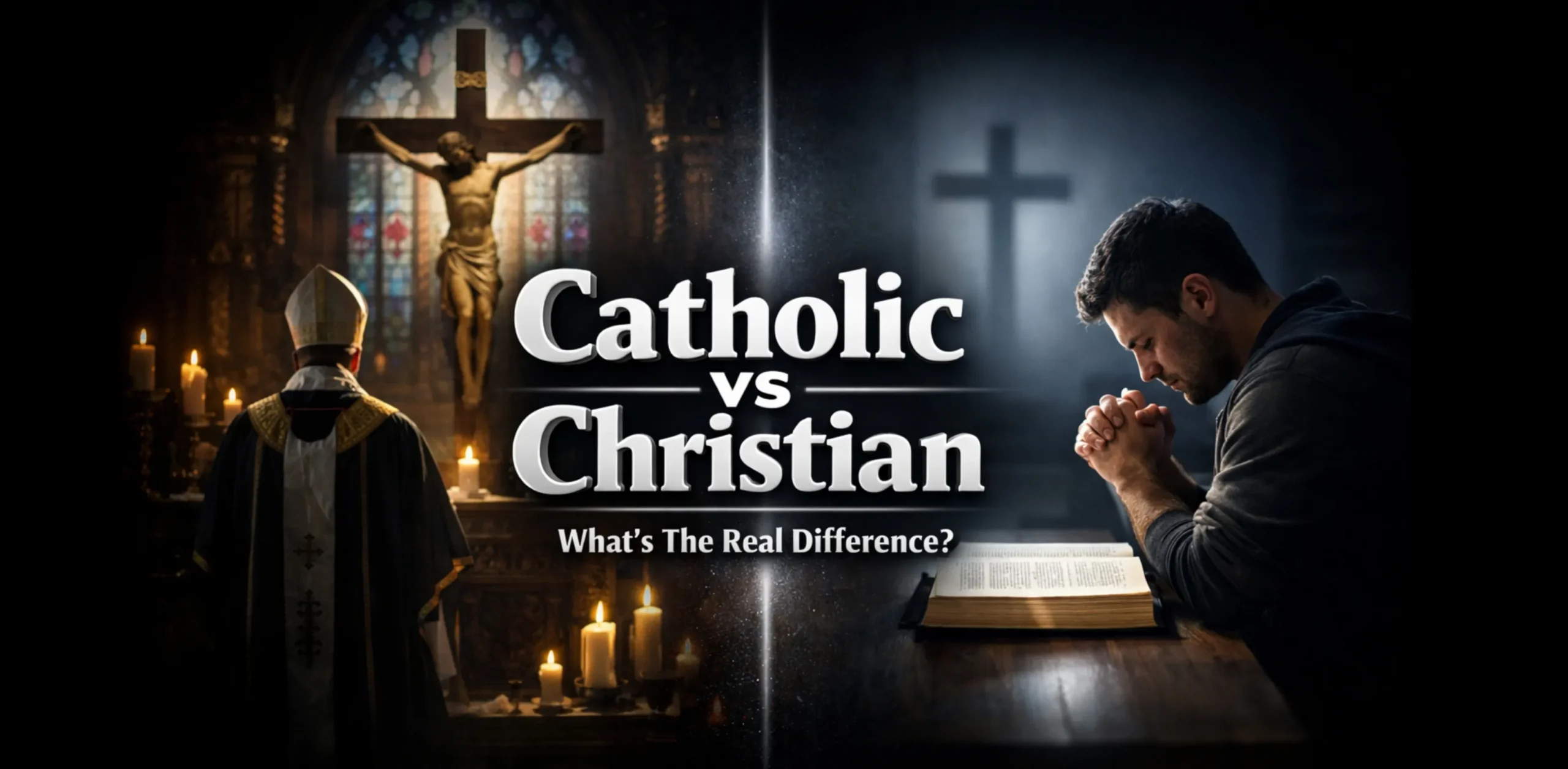
What is the difference between Catholic and Christian?
Many people ask this question because both groups follow Jesus, read the Bible, and share many core beliefs yet they are not the same. The difference between Catholic and Christian becomes clear when you look at how each understands spiritual authority, church structure, traditions, and specific doctrines.
This guide explains everything in a simple, respectful, and easy-to-understand way so you can clearly see what sets them apart and what unites them. Whether you’re exploring faith, comparing beliefs, or seeking clarity, this breakdown will help you understand the topic with confidence.
Are Catholics Considered Christians? (Identity Explained)
What Both Catholics and Christians Believe in Common
Both Catholics and Christians build their faith on the same foundation Jesus Christ as Lord and Savior. They believe in the Trinity, the death and resurrection of Jesus, the authority of the Bible, and the call to live a life shaped by God’s Word. These shared beliefs form the core of Christianity, which is why Catholics are indeed considered Christians. Despite differences in interpretation and practice, both groups affirm the same central message of the Gospel.
Why People Get Confused Between the Two
Many people assume “Christian” refers only to Protestants, which creates unnecessary confusion. The Catholic Church is actually the oldest branch of Christianity, but over time, language, culture, and denominational diversity have caused the terms to feel separate. When people see different worship styles, traditions, or church leadership structures, they mistakenly think Catholics are outside Christianity. This confusion comes from misunderstanding not from theological exclusion.
Main Difference Between Catholic and Christian Beliefs
Authority — The Pope vs. Scripture Alone
This is one of the most significant differences. Catholics believe the Pope, along with church tradition and the Bible, carries spiritual authority. Christians in Protestant denominations follow Sola Scriptura, meaning the Bible alone is their highest authority. While Catholics trust the Church to interpret Scripture, Protestants emphasize personal reading and interpretation guided by the Holy Spirit. This contrast shapes how each group understands doctrine, leadership, and faith practices.
Salvation, Grace, and the Role of Sacraments
Both Catholics and Christians believe salvation comes through Jesus, but their process differs. Catholics view sacraments like baptism, confession, and the Eucharist as channels of grace that help believers grow spiritually. Protestant Christians focus on salvation by grace through faith alone, without requiring sacraments as necessary steps. These different perspectives influence how each group experiences forgiveness, spiritual growth, and daily faith.
Tradition vs. Sola Scriptura
Catholics rely on both Scripture and sacred tradition passed down from the early Church. They believe tradition helps preserve teachings that are not explicitly written in the Bible. Christians in Protestant denominations reject this approach and hold firmly that all teachings must come directly from Scripture. This difference affects how each group forms doctrine and understands church authority.
Catholic vs Christian Worship Practices
Mass vs Church Service
Catholic worship centers on the Mass, which follows a structured liturgy and places strong emphasis on the Eucharist. The Mass includes readings, prayers, rituals, and the belief that communion becomes the actual body and blood of Christ. Protestant Christian church services are more flexible, varying widely from one denomination to another. Their focus is usually on preaching, worship music, and Bible teaching, with communion observed as a symbolic remembrance rather than a sacrament that changes spiritually.
The Role of Saints, Mary, and Confession
Catholics honor Mary and the saints as spiritual intercessors and examples of faith. They also practice confession to a priest as part of seeking forgiveness and spiritual healing. Most Christians in Protestant traditions pray directly to God without saintly intercession and believe confession is made personally to God, not through clergy. These differences shape how believers pray, seek guidance, and practice daily devotion.
The Concept of “One Universal Church” vs Denominations
The Catholic Church sees itself as the one universal Church founded by Christ, united under a single leadership structure. Protestant Christianity is diverse, made up of many denominations with different interpretations, practices, and governance. For Catholics, unity is institutional; for Protestants, unity is spiritual and centered on shared faith in Christ rather than a single global authority.
Difference Between Catholic Bible and Christian Bible
Why the Catholic Bible Has More Books
The Catholic Bible contains 73 books, while most Protestant Christian Bibles have 66. The difference comes from the Deuterocanonical books, which Catholics accept as part of Scripture and Protestants classify as historical writings. These books were included in early Christian tradition, but later removed during the Protestant Reformation. This distinction doesn’t change the central message of the Bible but does reflect different views on which writings carry divine authority.
Translation and Canon Differences
Catholic Bibles often use translations approved by the Church, such as the NABRE, and include footnotes shaped by Catholic teaching. Protestant Bibles vary widely in translation style like the NIV, ESV, or KJV but all follow the 66-book canon. Differences in translation and canon influence how certain passages are interpreted, especially those related to salvation, tradition, or doctrine.
How Both Use the Bible in Worship
In Catholic worship, Scripture is read in a structured liturgy where specific passages are assigned for each day. The Mass includes readings from both the Old and New Testaments, plus a Gospel reading. In Protestant churches, pastors typically choose passages for sermons based on themes or ongoing studies. Both rely deeply on Scripture, but their styles of teaching and reading differ.
Catholic, Protestant, and Orthodox Differences (Brief Snapshot)
Roman Catholic vs. Protestant Christian
Roman Catholicism and Protestant Christianity differ mainly in authority, doctrine, and church structure. Catholics follow the Pope, observe seven sacraments, and combine Scripture with sacred tradition. Protestants reject papal authority, accept only two sacraments (baptism and communion), and rely solely on the Bible for doctrine. These distinctions emerged during the Reformation and still shape both groups today.
Catholic vs Orthodox Christian Differences
Catholics and Orthodox Christians share ancient roots and similar liturgical traditions, yet differ in leadership and theology. The Orthodox Church does not accept the Pope’s authority and follows its own councils and patriarchs. They also differ slightly on teachings like the filioque clause, certain sacraments, and some liturgical practices. Despite these differences, both traditions hold deep respect for early Christianity.
Orthodox Christian vs Roman Catholic
While both are sacramental and liturgical, Orthodox Christianity emphasizes mystical worship, ancient rituals, and collective leadership through patriarchs. Roman Catholicism has a more centralized structure, clear doctrinal definitions, and universal governance through the Vatican. Their divergence reflects historical separation rather than total theological opposition.
FAQ
What is the main difference between Catholics and Christians?
Catholics follow the Pope and sacred tradition, while Christians in Protestant denominations follow the Bible alone.
Are Catholics considered Christians?
Yes. Catholics are Christians because they believe in Jesus Christ, the Bible, and the core teachings of Christianity.
Why does the Catholic Bible have more books?
Because it includes the Deuterocanonical books, which Protestants later removed from their canon.
Which came first — Catholic or Christian?
Christianity came first; the Catholic Church formed as the earliest organized branch of Christianity.
Is it okay for a Christian to attend a Catholic Mass?
Yes, attending is allowed, but participation in communion may be restricted depending on church rules.
Conclusion
Understanding the difference between Catholic and Christian beliefs helps clear the confusion that many people face when comparing these two major expressions of the same faith. While Catholics and Christians share core teachings about Jesus, the Bible, salvation, and the Gospel, they differ in authority, worship practices, tradition, and how they interpret Scripture. Whether it’s the role of the Pope, the structure of Mass, or the differences between the Catholic and Christian Bible, each perspective reflects a unique journey of faith.
By recognizing both their unity and their distinctions, readers can appreciate the richness of Christianity as a whole and better understand where each tradition stands today.
“To deepen your understanding of how Scripture developed, you can also explore our guide on what the biblical canon really means.”

Hi, I’m Prashanta Kumbhar, a Christian blogger, faith writer, and the founder of Light and Gospel (LightandGospel.com), based in Odisha, India.
I regularly write Bible devotionals, prayers, Scripture reflections, and faith-based messages to encourage people in their daily walk with Jesus Christ and help them grow in hope, faith, and spiritual strength.
Along with blogging, I also create Christian content on my YouTube channel “The God Helps” and share faith, prayer, Bible study, and motivational messages across social media platforms like Facebook & Instagram. My mission is to make God’s Word simple, practical, & meaningful for everyday life.
1 thought on “What Is the Difference Between Catholic and Christian? A Clear & Simple Guide”
Comments are closed.