
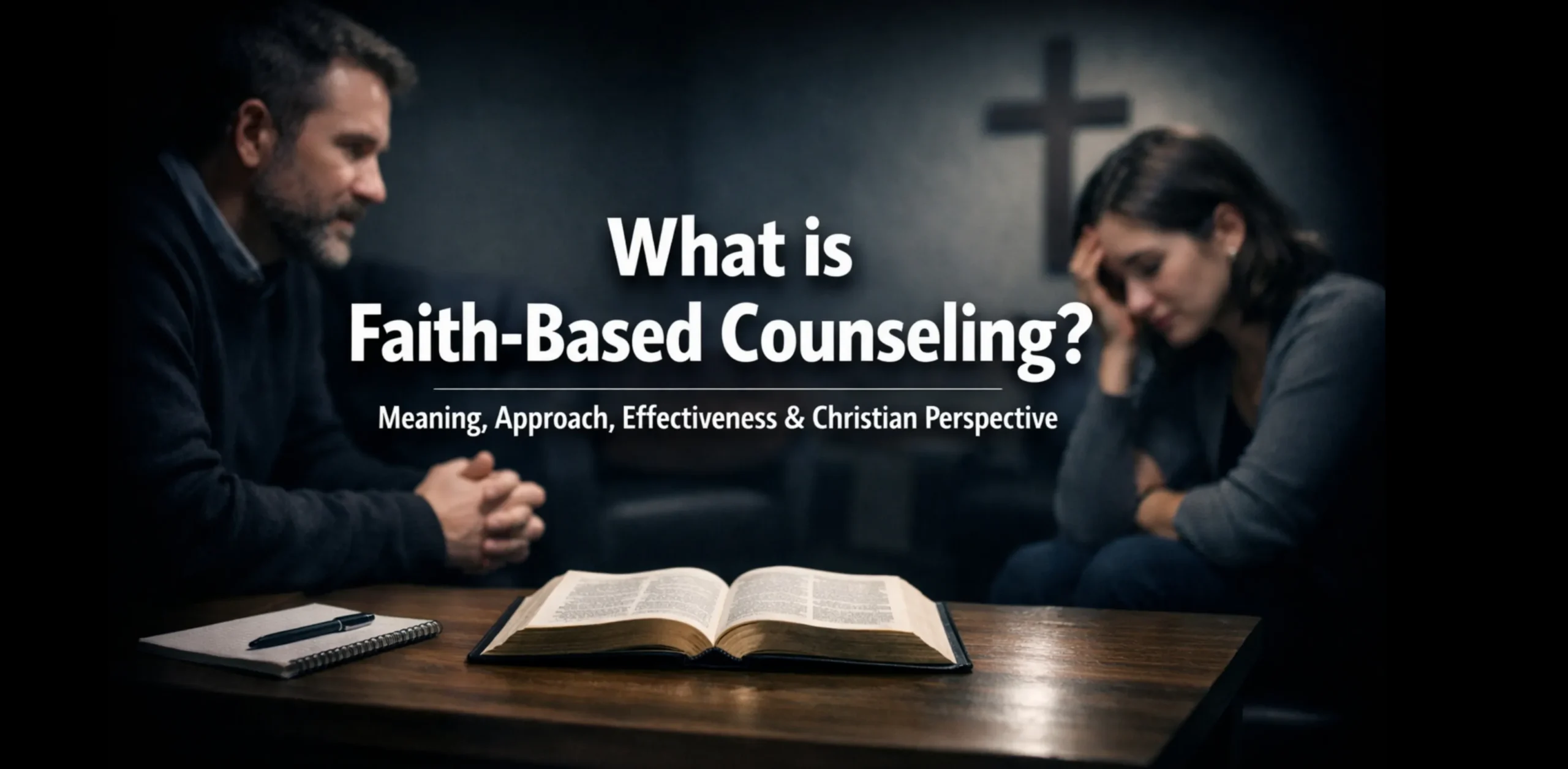
If you are searching for what is faith based counseling, you likely want more than a dictionary definition. You want to understand how it works, who it is for, and whether it truly helps.
Faith-based counseling is a therapeutic approach that integrates spiritual beliefs often Christian faith with established psychological principles. Instead of separating mental health from spirituality, it treats both as connected parts of a person’s life.
For many believers, emotional struggles, marriage issues, anxiety, trauma, and identity questions are not just psychological they are also spiritual. Faith-based counseling addresses both dimensions with clarity, structure, and professional care.
Let’s explore this deeply and practically.
What Is Faith Based Counseling?
Faith-based counseling is a form of therapy that integrates a person’s religious beliefs, spiritual values, and sacred texts into the counseling process while using established psychological methods.
In Christian contexts, this often includes:
- Biblical principles
- Prayer (when appropriate)
- Spiritual accountability
- Moral and ethical alignment
- Christ-centered identity work
Unlike purely secular therapy, faith-based counseling does not treat faith as irrelevant or neutral. It recognizes that beliefs shape behavior, emotional resilience, marriage dynamics, forgiveness, guilt, and purpose.
It is important to note: legitimate faith-based counseling is not preaching. It is structured, ethical, and guided by trained professionals.
What Does Faith-Based Counseling Mean?
At its core, faith-based counseling means integrating spiritual worldview with psychological care.
This integration usually involves three layers:
1. Spiritual Framework:- Counseling aligns with a person’s faith convictions instead of challenging or dismissing them.
2. Emotional Healing:- Evidence-based therapeutic tools are used to address anxiety, depression, trauma, relationship issues, and behavioral struggles.
3. Moral Clarity:- Decisions are evaluated not only for emotional benefit but also for spiritual alignment.
In Christian settings, Scripture may serve as a foundation for identity, forgiveness, reconciliation, and hope.
What Is a Faith-Based Counselor?
A faith-based counselor is a trained mental health professional who integrates faith perspectives into therapy.
There are two main categories:
Licensed Christian Therapist
- Holds professional clinical credentials
- May specialize in trauma, marriage, anxiety, or addiction
- Integrates Christian beliefs into therapy sessions
Pastoral Counselor
- Often a trained pastor or ministry leader
- Focuses more on spiritual guidance
- May not provide clinical diagnosis or treatment
Professional associations such as the American Association of Christian Counselors provide training and ethical standards for Christian counselors.
When choosing a counselor, verify credentials if you need clinical-level care.
What Is a Faith-Based Approach in Therapy?
A faith-based approach combines psychological techniques with spiritual truth.
Common techniques include:
- Cognitive reframing through Scripture
- Guided prayer (if the client desires it)
- Forgiveness processing
- Identity work rooted in faith
- Marriage covenant reinforcement
For example, when working with anxiety, a counselor may combine cognitive behavioral tools with reflection on trust, surrender, and spiritual grounding.
The integration feels natural not forced.
What Are the Main Types of Faith-Based Counseling?
Faith-based counseling is not one single model. It includes several approaches:
1. Biblical Counseling:- Primarily Scripture-centered. Often focuses on repentance, obedience, and spiritual growth.
2. Christian Clinical Counseling:- Licensed therapy that integrates faith with psychology.
3. Pastoral Counseling:- Church-based guidance focusing on spiritual direction.
4. Faith-Integrated Marriage Counseling:- Combines relationship science with covenant theology and biblical roles.
Each type serves different needs. Clinical-level mental health conditions require licensed professionals.
Does Faith-Based Marriage Counseling Work?
Research suggests that couples who share spiritual values often benefit from counseling that honors those values.
Faith-based marriage counseling works best when:
- Both partners share similar beliefs
- The counselor is trained in relationship science
- Practical communication tools are included
- Spiritual accountability is balanced with empathy
It may be less effective when:
- One partner resists faith integration
- The counselor lacks clinical training
When done professionally, it can strengthen communication, forgiveness, and commitment.
Is IFS Therapy OK for Christians?
Internal Family Systems (IFS) teaches that the mind contains different “parts” that influence behavior and emotions.
From a Christian perspective:
What Aligns:-
- Emotional awareness
- Compassion toward wounded inner parts
- Trauma processing
What Requires Discernment:-
- Theological interpretation of “Self”
- Avoiding spiritual reinterpretation that conflicts with Christian doctrine
Many Christian therapists use IFS techniques while grounding identity in Christ rather than self-divinization.
The key is theological clarity and professional discernment.
How Many People Seek Faith-Based Counseling?
Exact numbers vary, but trends show increasing demand for spiritually aligned therapy.
Reasons include:
- Desire for values-based counseling
- Dissatisfaction with purely secular models
- Growing awareness of mental health within churches
- Marriage struggles within faith communities
In regions where Christianity remains culturally strong, demand continues to rise.
Does Medicare Cover Faith-Based Counseling?
Medicare coverage depends on licensing not religious identity.
Medicare may cover counseling if:
- The provider is licensed
- The service meets medical necessity standards
- The therapy aligns with covered mental health services
It does not pay based on whether the counselor is Christian. It pays based on credentials and clinical eligibility.
Always verify coverage directly with the provider.
How Has Faith-Based Counseling Changed Lives?
When implemented responsibly, faith-based counseling can:
- Restore struggling marriages
- Reduce anxiety through hope-centered identity
- Help individuals process guilt and forgiveness
- Strengthen spiritual maturity
- Build resilience grounded in faith
The most effective results occur when spiritual conviction and psychological tools work together—not in opposition.
How to Counsel Young Engaged Couples Using a Faith-Based Approach
Premarital counseling within a faith framework often includes:
- Covenant theology discussion
- Communication skill training
- Conflict resolution grounded in humility
- Financial planning with stewardship principles
- Spiritual leadership expectations
Engaged couples benefit from clarity before commitment.
Practical preparation reduces long-term relational breakdown.
FAQs
What is faith based counseling in simple terms?
It is therapy that integrates a person’s religious beliefs with psychological techniques to address emotional and relational challenges.
Is faith-based counseling biblical?
Christian faith-based counseling aligns therapy with biblical values, though the level of Scripture integration varies by model.
Is Christian counseling different from regular therapy?
Yes. It includes spiritual worldview integration, while secular therapy remains religiously neutral.
Can Christians use secular therapy?
Yes. Many Christians benefit from secular therapy, especially when working with licensed professionals. Faith integration depends on personal preference.
Does insurance cover Christian counseling?
Insurance typically covers licensed therapy services, regardless of whether the counselor integrates faith.
Is IFS therapy compatible with Christianity?
Some elements align with emotional healing principles, but theological discernment is necessary.
Conclusion
Understanding what is faith based counseling requires looking beyond simple labels.
It is not just therapy with prayer. It is structured, professional care that respects spiritual conviction while addressing emotional and relational needs.
For believers, mental health and faith are not separate categories. They intersect in identity, forgiveness, hope, and transformation.
When guided by trained professionals with theological clarity and clinical competence, faith-based counseling becomes a powerful tool for healing the whole person mind and spirit together.